
-
 If you are searching for where to buy optical network terminal equipment, choosing the right supplier can be just as important as choosing the ONT itself. An Optical Network Terminal (ONT) sits at the customer end of a PON network and connects the optical access network to Ethernet, Wi-Fi, voice, or…Read more →
-
 Every time you stream a 4K movie, join a video conference, or download a large file over Wi-Fi, a sophisticated modulation technique is working behind the scenes. It’s called Quadrature Amplitude Modulation, or QAM. But what is QAM in networking, exactly, and why does it have such a big impact…Read more →
-
 You launch a signal into a fiber. Most of it travels forward, reaches the receiver, and does its job. But some of it bounces back. That reflected light travels in the opposite direction of your intended signal—and if you’re not managing it, you’re dealing with noise, instability, and potentially dam…Read more →
-
 If you’ve ever tried to measure optical power on a live PON network with a standard optical power meter, you’ve probably gotten a reading that didn’t make sense. You’re not alone. Measuring optical power is one of the most fundamental tasks in fiber optic testing. But here…Read more →
-
 If your internet suddenly drops and you see unfamiliar lights on that small box where the fiber line enters your home, you’re likely dealing with a non-functioning optical network terminal. It’s a frustrating situation, especially when you rely on the internet for work, entertainment, an…Read more →
-
 Fiber optic networks are the backbone of modern communication, carrying vast amounts of data across the globe. But here’s a surprising fact: the number one cause of fiber optic link failures isn’t broken cables or faulty equipment—it’s contaminated connector end faces. Dirt, dust, …Read more →
-
 Fiber optic cables are the invisible highways of our digital world, carrying everything from streaming videos to critical business data. When these delicate cables get damaged, the clock starts ticking. Can you patch them? Absolutely—but unlike splicing copper wire, you cannot simply twist strands t…Read more →
-
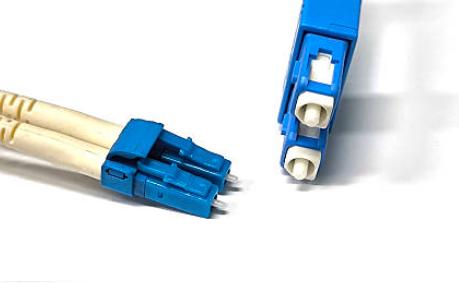 Fiber optic patch cords are the backbone of modern high-speed networks, connecting equipment and enabling data transmission across data centers, telecom networks, and enterprise infrastructure. At the heart of every fiber connection lies the connector, and two of the most widely used types are LC an…Read more →
-
 If you’re planning an FTTH deployment — whether you’re an ISP launching a new service, a system integrator designing a network, or an enterprise buyer evaluating equipment — you already know that the ONU (Optical Network Unit) is the device your subscribers will actually see and touch. I…Read more →
-
 Fiber optic networks carry 99% of the world’s internet traffic. But without the optical receiver, all that light would be useless. While optical transmitters get the glory, the receiver does the harder job: taking a weak, distorted light pulse that has traveled for miles and turning it back in…Read more →
-
 As fiber optic networks continue to expand in data centers, enterprise campuses, FTTH deployments, and telecom infrastructure, selecting the right fiber patch panel types becomes increasingly important. A well-designed patch panel not only organizes fiber connections but also protects delicate optic…Read more →
-
 Every time you connect to WiFi, your personal data—passwords, emails, financial transactions—travels through the air. Without proper protection, anyone within range could intercept that information. That’s where WiFi Protected Access (WPA) comes in. WPA is the security framework that encrypts …Read more →
-
 If you’ve ever looked into a crowded network rack and wondered how technicians keep hundreds of delicate fiber optic cables straight, the answer is often a humble but essential device: the fiber patch panel. Also known as a fiber distribution panel, this device is the central hub for managing,…Read more →
-
 Fiber optic cable is the backbone of many modern communication networks, supporting high-speed data transmission in data centers, telecom networks, FTTH systems, enterprise networks, and industrial applications. Compared with copper cabling, fiber provides high bandwidth, low attenuation, and excell…Read more →
-
 Fiber optic networks rely on countless connection points where cables are spliced, branched, or repaired. These exposed splices must withstand moisture, dust, mechanical stress, and temperature fluctuations—and that is precisely the role of a fiber optic closure. Whether you are deploying FTTH, expa…Read more →
Testimonials

Lomoveishiy – Finland11

