
Fiber optic splicing plays a pivotal role in ensuring seamless data transmission across modern communication networks. Whether it’s for the installation of new fiber optic cables or the repair of existing connections, the method used for splicing can significantly impact the network’s performance. In this blog, we’ll compare fusion splicers vs mechanical splicers, diving into the evolution of fiber optic splicing, the ins and outs of fusion and mechanical splicing, and how to choose the right splicer for your specific needs.

Table of contents
- Fusion Splicing
- Advantages of Fusion Splicing
- Disadvantages of Fusion Splicing
- Mechanical Splicing
- Advantages of Mechanical Splicing
- Disadvantages of Mechanical Splicing
- Mechanical Splicing Applications
- Fusion Splice vs Mechanical Splicing
The Evolution of Fiber Optic Splicing
Fiber optic technology has revolutionized how we connect and communicate, offering high-speed, high-capacity transmission for data and voice signals. However, as this technology grew, so did the need for advanced methods to connect fibers efficiently.
Splicing fiber optic cables — joining two optical fibers — was once a tedious and time-consuming task, often requiring handcrafting and intricate procedures. Over time, however, new splicing methods emerged, improving both efficiency and accuracy. Today, fusion splicing and mechanical splicing dominate the fiber optic landscape, each offering unique advantages.

Fusion Splicing: The Permanently Precise Bond
Fusion splicing is widely regarded as the most reliable and efficient method for connecting fiber optic cables. It involves the use of heat to fuse two fiber ends together, creating a continuous, low-loss connection that’s ideal for high-performance networks.
How Fusion Splicing Works
Fusion splicing involves the precise alignment of two fiber optic strands. The process typically involves the following steps:
Preparation: The fiber ends are stripped of their coatings and cleaved (cut) to a flat, smooth surface. This step is crucial for minimizing signal loss.
Alignment: A fusion splicer — a specialized tool equipped with microscopic alignment technology — aligns the two fibers with pinpoint accuracy.
Fusion: The splicer generates an electrical arc that melts the fiber ends, fusing them into a single, continuous strand. This results in a connection that has virtually no loss, ensuring maximum signal strength.

Innovations in Fusion Splicing
Fusion splicing has evolved significantly over the years, thanks to advancements in fusion splicing equipment. Some of the key innovations include:
Automated Cleaving: Modern fusion splicers come with built-in cleaving functions, allowing for precise fiber preparation, reducing the likelihood of splice errors.
Core Alignment Systems: Cameras and software actively align the light-carrying cores, not just the outer cladding, for minimal loss.
Real-Time Loss Estimation: Some fusion splicers are equipped with loss estimation software that provides real-time data on splice loss, helping technicians ensure optimal performance.
Portable Fusion Splicers: With the introduction of lightweight and portable fusion splicing tools, technicians can perform high-quality splicing in the field, even in remote locations.
LID (Local Injection and Detection): Sends light down one fiber and detects it in the other during alignment for ultimate precision.
Heated Shrinking Splice Protectors: Automatically protect the fragile splice point.
Advantages of Fusion Splicing
Low Insertion Loss:
Fusion splicing is widely regarded for producing the lowest insertion loss (signal loss) compared to all other splicing methods, including mechanical splicing. This makes fusion splicing ideal for high-performance networks where minimal signal degradation is critical, such as telecom backbones and high-bandwidth data centers.
High Durability:
When properly protected, splicing technology is very durable. Once protected with a splice sleeve, the fused glass joint is impervious to moisture and temperature swings, offering a service life exceeding decades. Because it creates a continuous, seamless connection between fiber ends, eliminating air gaps and external components. This bond is highly resistant to environmental factors like moisture, temperature changes, and vibration, ensuring a low-loss, long-lasting splice. Mechanical splicing, on the other hand, relies on external connectors and adhesives to hold the fibers in place, which can degrade over time, leading to increased insertion loss and potential misalignment.
This makes fusion splicing ideal for permanent installations in harsh environments, like underwater or in industrial settings.
Consistency and Precision:
Fusion splicing equipment is designed for high precision and consistent results. It aligns fibers at a microscopic level to ensure perfect fusion, leading to repeatable, reliable splices each time.
This is critical for large-scale deployments where thousands of splices must meet the same quality standards.
Better for Long-Distance Connections:
Fusion splicing is ideal for long-distance or high-performance connections because it has the lowest signal loss, which is especially important in fiber optic backbone networks or cross-country data transmission.
No Adhesives or Gels Needed:
Unlike mechanical splicing, fusion splicing doesn’t require the use of adhesives or gels, which can degrade over time or become susceptible to environmental factors.

fusion splicing equipment
Disadvantages of Fusion Splicing
Higher Initial Cost:
Fusion splicing tools and equipment are expensive. The fusion splicer itself, as well as cleaving tools and other accessories, can cost several thousand dollars.
Additionally, fusion splicing requires specialized training to use the equipment and to achieve the precise alignment needed for high-quality splicing.
Time-Consuming:
The fusion splicing process takes longer to set up and perform than mechanical splicing. It involves careful preparation of the fibers, cleaving, aligning, and fusing, making it less ideal for time-sensitive repairs or installations.
Requires Power Source:
Fusion splicing requires an electrical power source to generate the high-temperature arc needed to melt and fuse the fibers together. This means fusion splicing is not as portable as mechanical splicing and may require a generator for fieldwork. But modern splicers are built with convenience in mind. Our Baudcom Fusion Splicer can operate for a full day on a single charge, ensuring that technicians can complete multiple splices on a single battery charge, making them ideal for fieldwork and remote locations.
Complex Equipment:
Fusion splicing equipment can be bulky and complicated, requiring regular maintenance and calibration. Transporting and setting up a fusion splicer in remote locations can be more challenging than using a mechanical splice tool.
Fusion Splicing Applications
Fusion splicing is used in a variety of high-performance applications where low insertion loss and long-term reliability are critical:
Telecommunication Networks: Fusion splicing is commonly used in the installation of backbone networks and long-distance fiber connections where signal integrity is paramount.
Data Centers: With the ever-increasing demand for data, fusion splicing ensures high-bandwidth connections in data centers, supporting everything from cloud services to large-scale storage.
Underwater and Harsh Environments: Fusion splicing is ideal for offshore and underwater networks, where durability against environmental factors like moisture and temperature is necessary.
Mechanical Splicing: A Simple, Cost-Effective Alternative
Mechanical splicing offers a simpler, more affordable alternative to fusion splicing. While fusion splicing involves using heat to fuse fibers, mechanical splicing uses a mechanical connector or gel to hold the fiber ends together.

How Mechanical Splicing Works
The mechanical splicing process typically involves the following steps:
Preparation: Similar to fusion splicing, fiber ends are stripped and cleaved to create a clean, flat surface.
Alignment: The fiber ends are placed in a mechanical splice connector or a specialized alignment fixture. The fibers are aligned using a gel or adhesive that helps them stay in contact, allowing light to pass through with minimal loss.
Securing the Splice: Once the fibers are aligned, they are secured in place with a mechanical connector or clamp. This step ensures the fibers stay in position, maintaining the connection.
Advantages of Mechanical Splicing
Lower Initial Cost:
Mechanical splicing equipment is generally cheaper than fusion splicing tools. Mechanical splice connectors are also relatively inexpensive, making it a good option for projects with a limited budget.
Simplicity and Ease of Use:
Mechanical splicing is easier to learn and quicker to execute compared to fusion splicing. It doesn’t require specialized training to perform, making it more accessible for less experienced technicians.
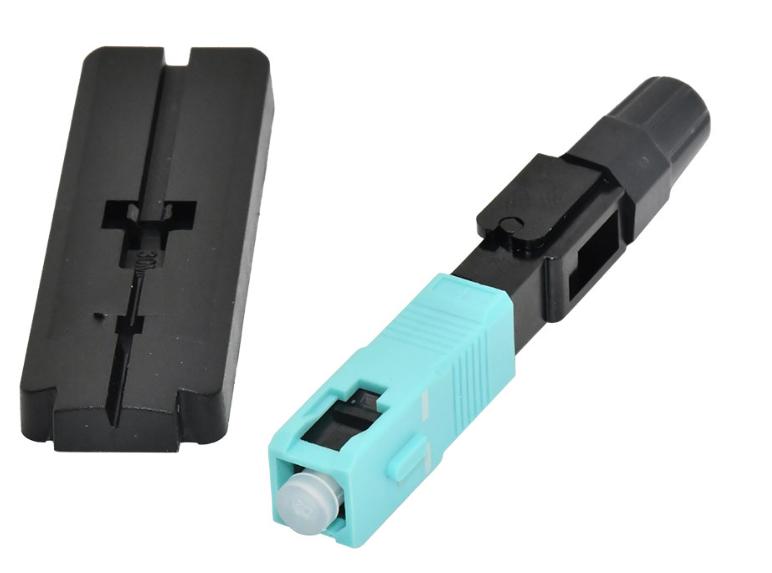
There is no need for electricity, making it ideal for remote or field locations without access to power.
Speed:
Mechanical splicing methods are often used in situations where quick installation or repair is needed.For example, home ONU (Optical Network Units) often incorporate mechanical splicing techniques due to their speed and simplicity. These devices typically don’t require the highest performance standards, making mechanical splicing a good fit for residential or small-scale deployments. Mechanical splicing is also used when a fast temporary or emergency solution is required, as the process is much quicker than fusion splicing.
Portability:
Because mechanical splicing tools are lightweight and don’t require bulky equipment. They are easy to carry and use in the field for quick fixes and temporary installations.
No Need for Power:
Unlike fusion splicing, which requires an electrical arc to melt and fuse fibers, mechanical splicing can be done without any external power source, which makes it more versatile in various environments, especially in fieldwork.
Disadvantages of Mechanical Splicing
Higher Insertion Loss:
The biggest disadvantage of mechanical splicing is the higher insertion loss compared to fusion splicing. This means that more light is lost during transmission, which can affect signal quality, especially in high-speed networks or long-distance connections.
Less Durability:
Mechanical splicing connectors are not necessarily less durable, but they are more vulnerable to external factors. When used correctly and in appropriate conditions, mechanical splices can last a long time. However, they may be more susceptible to issues like moisture and mechanical stress over time compared to fusion splices, which form a continuous strand of fiber.
Potential for Inconsistent Results:
While mechanical splicing is simple, it can produce inconsistent results, particularly if the technician isn’t experienced. Alignment and the type of mechanical connector or adhesive used can affect the quality of the splice.
Limited for High-Bandwidth Applications:
Mechanical splicing is typically not recommended for high-bandwidth, high-performance, or long-distance applications, we’re generally referring to fiber optic networks that support large volumes of data or high-speed transmission. For example, 10Gbps (gigabits per second) connections and above, because the higher insertion loss and potential for signal degradation can interfere with network performance.
Is Mechanical Splicing Still Usable? Yes, mechanical splicing is still very much usable in certain contexts, even with its disadvantages. The method is especially practical in the following scenarios:
Mechanical Splicing Applications
While fusion splicing is often the preferred method for high-performance, permanent installations, mechanical splicing offers a versatile and cost-effective solution for various scenarios. Mechanical splicing encompasses several distinct methods, each suited for specific needs. These include cold splices, quick connectors, and adapters/flanges. Here’s how each of these splicing methods is used in practice:
-
For Permanent, Low-Volume Field Splices: Cold Splice Units

These are standalone, reusable or one-time-use mechanical splice bodies. They create a fixed, protected point splice.
Emergency Cable Restoration: The premier application. When a backbone fiber is cut, a technician can use a cold splice to create a stable, sub-0.5 dB loss connection in under 3 minutes—without power. This restores service immediately, allowing a permanent fusion repair to be scheduled later.
Drop Cable Splicing in FTTH: For connecting a single subscriber’s drop cable to a distribution cable in a terminal or closure, a cold splice unit is fast, reliable, and avoids the cost of deploying a fusion splicer for one or two fibers.
Low-Volume Contractor Work: Ideal for electricians or technicians who only occasionally need to splice fiber, as it eliminates the high capital investment in fusion equipment.
-
For Rapid, Connectorized Termination: Quick Connectors

Pre-Polished Splice (PPS) connectors have a factory-polished ferrule and a mechanical splice mechanism built into the rear. They allow field termination of a fiber with a connector in minutes.
FTTH & MDU Installations: Used extensively to terminate fiber directly onto an ONU/ONT at the customer premises or in a multi-dwelling unit wiring closet. It provides a durable, plug-and-play interface.
Field-Making Patch Cables: Creating a custom-length jumper or replacing a broken connector in the field without needing a polishing truck or fusion splice-on-pigtail.
Equipment Room & Data Center Adds/Moves/Changes: When a new device needs connecting and a pre-made jumper isn’t the right length, a quick connector provides an immediate, on-site solution.
-
For Reconfigurable Links & Testing: Adapters and Flanges
These are alignment sleeves that hold two connectorized fibers or bare fiber ends in precise, temporary contact. They are the core of patch panels and test equipment.
Laboratory Test Environments: Bare fiber adapters (flanges) allow for rapid connection and disconnection of bare fiber ends to power meters, light sources, and OTDRs for characterization and testing.
Patch Panels & Distribution Frames: The standard LC, SC, or MPO adapter in every patch panel is a form of mechanical splice flange, providing the critical, reconfigurable interface between the permanent plant and customer equipment.
Network Troubleshooting & Bypassing: Using a simple coupling adapter to temporarily link two fibers to isolate a network segment or test a specific path.

-
Cross-Cutting Applications for All Types
Harsh or Hazardous Environments: In explosive atmospheres (oil & gas, mining) where a fusion splicer’s electric arc is prohibited, cold splices are the only safe option. Their simplicity also makes them robust in extremely dusty, wet, or cold conditions.
Military & Tactical Deployments: The speed, portability, and power independence of both cold splices and quick connectors are essential for rapidly establishing or repairing field communication networks.
In conclusion, mechanical splicing offers flexibility and cost-effectiveness in various scenarios, from emergency repairs to temporary connections and lab environments. While it may not offer the same long-term durability as fusion splicing, its ability to provide quick, simple connections in diverse applications makes it an indispensable tool in fiber optic networks.

The Right Splicer for the Job: Fusion Splice vs Mechanical Splicing
The choice between fusion splice vs mechanical splicing isn’t about which is universally better, but which is better for your specific task. Here’s a quick guide:
| Consideration | Fusion Splicing | Mechanical Splicing |
| Primary Strength | Ultra-low loss & high reliability (typically <0.1 dB) | Speed & portability (no power required) |
| Cost Model | High initial equipment cost, low per-splice cost. | Very low equipment cost, higher per-unit connector cost. |
| Skill Required | Training needed. | Can be performed with minimal training. |
| Longevity | Permanent, stable connection for decades. | Can be temporary; gel may dry out over very long periods. |
| Best For | High-performance, permanent installations. High-volume work. | Restorations, low-volume work, harsh/remote environments. |
For applications where signal integrity is critical, such as in telecommunications, fiber optic backbones, and data centers, fusion splicing is the ideal choice due to its low insertion loss and durability. On the other hand, mechanical splice connectors offer a more budget-friendly and user-friendly solution for low-priority or temporary splicing needs.
Conclusion
Choosing between a mechanical splice vs fusion splice should be driven first by the technical demands of the application, not just budget. What is a fusion splicer used for? It is the tool for building the permanent, high-performance foundation of your network. For the vast majority of outside plant and data center installations, fusion splicing equipment is the necessary investment for quality and longevity.
Mechanical splice connectors, on the other hand, are the essential “first aid kit” for network operators—indispensable for rapid recovery and specific field challenges. They are a solution for specific scenarios, not a general substitute.
By understanding the true capabilities and trade-offs of each method, you can strategically deploy both in your toolkit, ensuring your network is both optimally built and rapidly repairable.
Keep Learning
Related article: What You Need to Know Before Investing in a Fusion Splicer


