
If you’ve ever found yourself staring at a wall of networking cables at the store, confused by labels like Cat 5e, Cat 6, Cat 7, or Cat 8, you’re not alone. The internet is full of conflicting advice, and choosing the wrong cable can bottleneck your speed, increase lag, or force you to rewire your entire home sooner than expected.
So, the real question is: Which Cat cable to use for your specific setup? And more importantly, why does it matter
Let’s break down everything you need to know to answer which cat cable is the right investment for your home or office—with clear explanations, no marketing fluff.
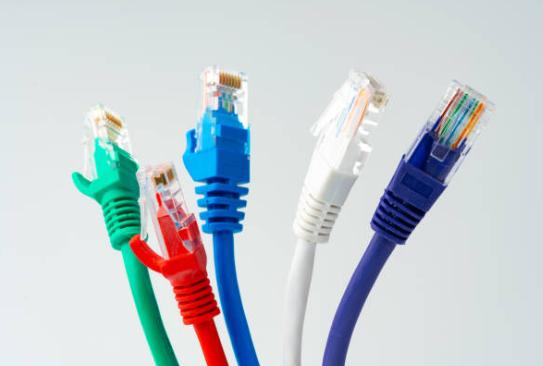
What Does “Cat” Actually Mean? (And Why You Should Care)
“Cat” stands for Category. These numbers (5e, 6, 7, 8) aren’t just random model numbers—they represent specific international standards (defined by TIA/EIA) that govern:
- Bandwidth (measured in MHz): How much data the cable can carry at once.
- Speed (measured in Gbps): How fast data travels.
- Distance (measured in feet/meters): How far the signal can go before degrading.
- Shielding & interference protection (important if you have many cables bundled together).
A higher category doesn’t always mean “better for you.” It means “designed for a different job.”
Common Ethernet Cable Categories
Let’s go through each cable type in detail so you understand exactly what they offer—and what they don’t.
Cat 5 (Dead and Buried)
Speed: Up to 100 Mbps
Bandwidth: 100 MHz
Max distance: 328 ft (100m)
Explanation: This cable was standard in the 1990s. Today, most home internet plans start at 300 Mbps. Let’s go through each type in detail so you know exactly what they offer—and what they don’t. Do not use it.
Cat 5e (The Budget Option)
Speed: Up to 1 Gbps (1000 Mbps)
Bandwidth: 100 MHz
Max distance: 328 ft
Explanation: The “e” stands for enhanced. It reduces crosstalk (interference between wires inside the cable) better than the original Cat 5. For a single person browsing the web or checking email on a 300 Mbps plan, this works fine. But it has a lower bandwidth (100 MHz) than modern cables, meaning it struggles when multiple devices are active. It’s also not future-proof—if you upgrade to gigabit internet, Cat 5e works, but without any room to grow.
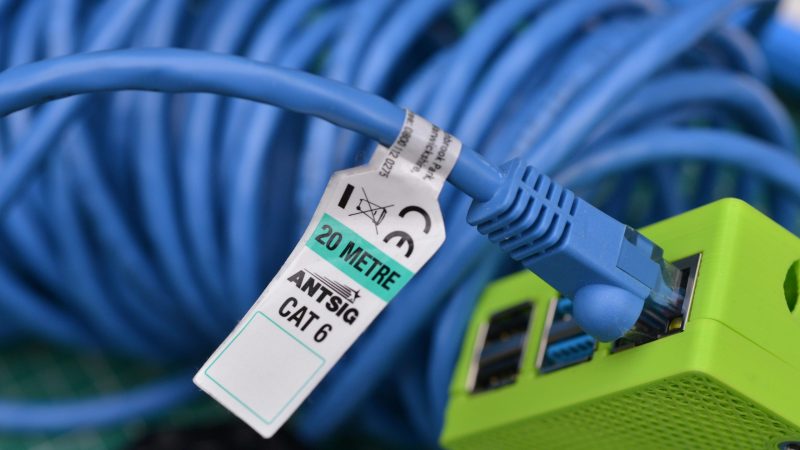
Cat 6 (The Sweet Spot – Recommended for most people)
Speed: 1 Gbps at full 328 ft, 10 Gbps up to 180 ft
Bandwidth: 250 MHz (2.5x Cat 5e)
Max distance for 10 Gbps: 180 ft (55m)
Explanation: This is where things get good. Cat 6 has stricter crosstalk specifications and often includes a plastic core separator that physically isolates the wire pairs. Why does that matter? Less interference means fewer packet losses, which means lower lag in games and smoother 4K/8K streaming.
Real-world example: You have a 1 Gig fiber connection. Your PC is 100 ft from the router. With Cat 5e, you might get 850–900 Mbps due to interference. With Cat 6, you’ll get 950+ Mbps consistently.
The 180 ft rule: If you need a cable longer than 180 ft and want 10 Gig speeds, step up to Cat 6a. But for 99% of homes, 180 ft is more than enough.
Cat 6a (The Long-Distance Champion)
Speed: 10 Gbps up to 328 ft (full distance)
Bandwidth: 500 MHz (double Cat 6)
Explanation: The “a” stands for augmented. Cat 6a has even thicker shielding (often individually wrapped pairs plus an outer foil shield). This makes it excellent for:
Running cables through walls, ceilings, or near power lines (where electrical interference is high).
Large homes where you need a 200+ ft run from the basement to the attic office.
Offices with dozens of cables bundled tightly together.
Downside: Stiffer, thicker, harder to bend. Not ideal for tight corners.
Cat 7 (Technically OK, But Not for Homes)
Cat 7 is a real standard—just not the one you think. It was created by ISO/IEC (11801 Class F), not by the TIA/EIA (the organization that sets most residential Ethernet standards in North America and beyond). This difference matters more than most people realize.
Speed: 10 Gbps+ (theoretically up to 100 Gbps at very short distances)
Bandwidth: 600 MHz
Explanation: Cat 7 was designed to work with specialized connectors—namely GG45, TERA, or ARJ45. These are not the standard RJ45 ports found on your router, PC, PlayStation, or TV. Cat 7’s shielding requires proper grounding at both ends to work correctly. Most home routers and devices have no such grounding. Without it, the shielding can actually attract interference rather than block it.
Cat 7 makes sense in very specific situations:
- Industrial environments with extreme electromagnetic interference (factories, power substations)
- Professional data centers using GG45 or TERA connectors and properly grounded racks
- High-frequency trading setups where every microsecond and every bit of shielding matters
Cat 8 (The Data Center Monster–Overkill for homes)
Speed: 25 Gbps (Cat 8.1) or 40 Gbps (Cat 8.2)
Bandwidth: 2000 MHz (8x Cat 6)
Max distance: Only 98 ft (30m)
Explanation: Cat 8 was designed for short connections inside data centers between servers and switches. It’s incredibly fast but over extremely short distances. For a home, it offers zero benefit because:
Your internet plan is almost certainly under 10 Gbps.
Your devices (TV, console, PC) have 1 Gbps ports, not 40 Gbps ports.
The shorter distance means you can’t run it from your living room to a bedroom (if that’s >98 ft).
It’s expensive and rigid.
Analogy: Buying Cat 8 for home use is like buying a freight train to deliver a single pizza. It’s technically powerful, but completely pointless for the job.
Which Cat Cable to Use? (Detailed Decision Guide)
Let’s walk through your actual situation step by step.
Scenario 1: You just need Netflix, email, and light browsing.
The answer: Cat 5e or Cat 6.
Why: Your internet plan is likely 100–500 Mbps. Cat 5e handles that easily. However, the price difference between Cat 5e and Cat 6 is often just $5–10 per cable. For that small premium, Cat 6 gives you better shielding and future-proofing.
Recommendation: If you’re on a tight budget, Cat 5e is fine. But if you plan to keep this cable for 5+ years, spend the extra few dollars on Cat 6.
Scenario 2: You have Gigabit internet (1,000 Mbps), or you game online.
The answer: Cat 6.
Why: Gaming requires low latency and zero packet loss. Cat 6’s better shielding reduces interference from nearby power cables, Wi-Fi routers, and even other Ethernet cables bundled together. Less interference = fewer lag spikes. Additionally, if you ever upgrade to 2.5 Gbps or 5 Gbps internet (available in some cities), Cat 6 can handle it up to 180 ft.
Scenario 3: You’re wiring a large house or office (runs over 180 ft).
The answer: Cat 6a.
Why: If you need to run a cable from your router in the basement to a home office on the second floor opposite the corner, that run might exceed 180 ft. Cat 6 will still work, but it will drop from 10 Gbps to 1 Gbps after 180 ft. Cat 6a maintains 10 Gbps for the full 328 ft.
Also consider: If the cable runs parallel to electrical wiring (inside walls), Cat 6a’s superior shielding prevents interference.
Recommendation: For long, in-wall installations, invest in Cat 6a. It’s more expensive but saves you from rewiring later.
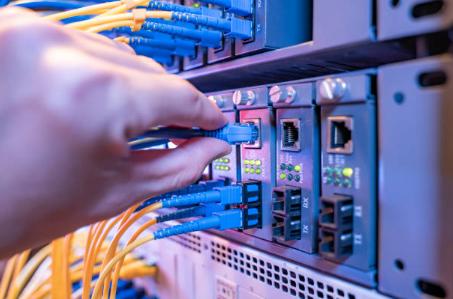
Scenario 4: You have a Data center Server Rack (very short, very fast connections).
The answer: Cat 8 (only for 10–40 ft connections between servers and switches).
Why: If you have a 10 Gbps or 25 Gbps internal network, and your server and switch are in the same rack (under 30 ft), Cat 8 ensures zero signal loss.
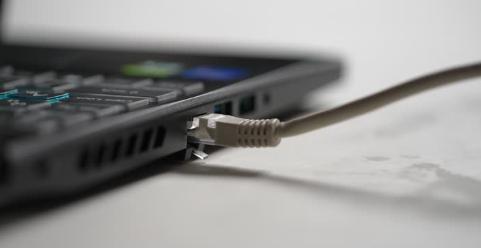
Warning: Your PC and router almost certainly do not support these speeds. Check your device’s Ethernet port: if it says “10/100/1000” (most do), it’s 1 Gbps max. Cat 8 will not make it faster.
Common Myths & Misconceptions
Myth 1: “A higher Cat number means faster internet.”
Truth: Your internet speed is limited by your internet plan and your router/device ports. If you have a 500 Mbps plan, every cable from Cat 5e to Cat 8 will give you the same 500 Mbps. Higher Cat cables only help if your internal network (devices talking to each other) requires higher speeds.
Myth 2: “Cat 8 is ‘future-proof’ for gaming.”
Truth: Gaming uses very little bandwidth (typically under 50 Mbps). The benefit of higher Cat cables is lower latency due to better shielding, but Cat 6 already provides excellent shielding. Cat 8’s 40 Gbps speed will not be used by consoles or PCs for at least another decade. By then, we’ll likely have Cat 9 or fiber.
Myth 3: “I need Cat 7 for 4K streaming.”
Truth: 4K streaming uses about 25 Mbps. Cat 5e handles 1000 Mbps. Cat 7 is 10,000 Mbps. You do not need Cat 7 for Netflix.
Myth 4: “Copper is copper – any cable works.”
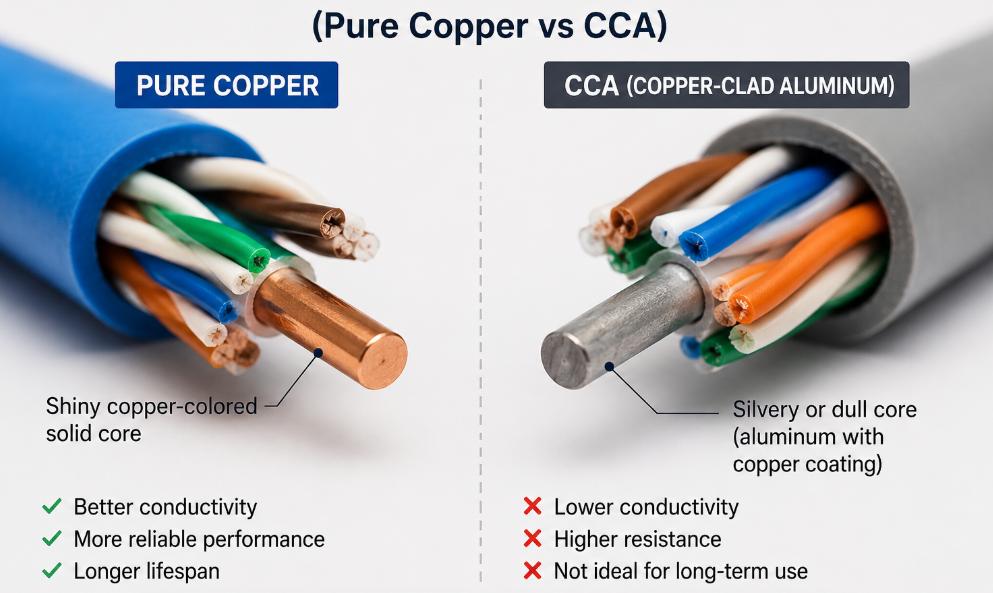
Truth: Cheap, no-name “Cat 6” cables on Amazon often use Copper-Clad Aluminum (CCA) instead of pure copper. CCA is brittle, heats up, and loses signal over distance.
| Your Situation | Which Cat Cable to Use |
| Budget setup, low internet speed (<500 Mbps), short cable | Cat 5e (but Cat 6 is better if budget allows) |
| Most homes, 1 Gig internet, gaming, streaming, home office | Cat 6 ← THE WINNER |
| Long runs (over 180 ft), wiring inside walls, high interference | Cat 6a |
| Data center, short 25-40 Gbps connections | Cat 8 |
| Any home use (Cat 7) | Avoid completely |
Conclusion
Your Ethernet cable is like a pipe carrying water. A wider pipe (higher Cat) doesn’t create more water—it just lets more flow if the source provides it. Most homes have a small pipe’s worth of internet speed. Putting a giant pipe (Cat 8) on a small source changes nothing.
Still unsure? Drop your setup details in the comments (internet speed, devices, room size) or contact us, and I’ll tell you exactly which cat cable to use.


