
In modern data communication networks, fiber optic cables are essential for ensuring high-speed and reliable connections. When deploying networks across large outdoor areas — such as between buildings, campuses, or industrial sites — one of the most durable and efficient cabling options is the direct burial fiber cable. But what exactly does “direct burial” mean, and how does it differ from other types of fiber optic cables? Let’s break it down, and focus on interesting question about: Does fiber optic cable have to be buried? How far down are fiber optic cables buried ?
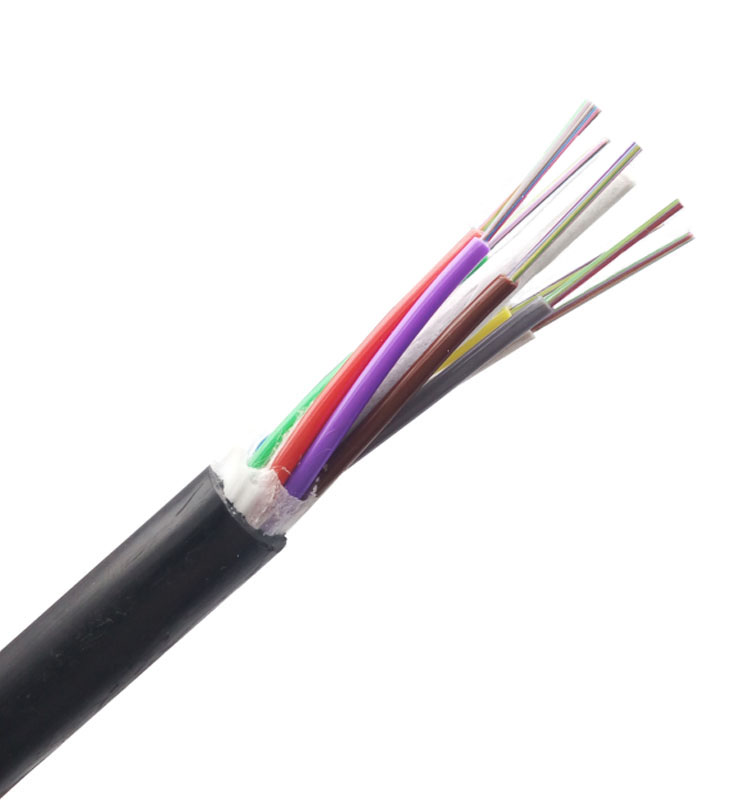
What Does Direct Burial Fiber Cable Mean?
A direct burial fiber cable is an outdoor-rated cable designed to be installed directly underground, without needing extra protective conduits or ducts.
It is constructed with multiple layers that allow it to withstand moisture, soil pressure, temperature changes, and even rodent attacks — all while maintaining consistent optical performance for decades.
Key Construction Features
Direct burial fiber cables typically include the following protective components:
Thick Outer Jacket: Made of high-density polyethylene (HDPE) for resistance to moisture, abrasion, and chemicals.
Water-Blocking Materials: Gel or water-swellable tape keeps moisture from reaching the fibers.
Armored Layer (Optional): Corrugated steel tape or steel wire armor protects against crushing forces and rodent damage.
Strength Members: Kevlar yarns or FRP (fiber-reinforced plastic) rods provide tensile strength during installation.
Central Loose Tube Design: Fibers sit inside loose tubes, reducing stress and microbending losses.
Together, these features make direct burial fiber cables the preferred option for underground networks that require long-term durability with minimal maintenance.
Types and Advantages of Direct Burial Fiber Cables
Not all direct burial cables are the same. The best choice depends on your installation environment, network size, and protection requirements.
1. Types of Direct Burial Fiber Cables
| Cable Type | Description | Typical Use Case |
|---|---|---|
| Armored Direct Burial Cable | Features a corrugated steel tape or steel wire armor for maximum mechanical protection against soil pressure and rodents. | Ideal for harsh environments, rocky soil, or long-distance outdoor networks. |
| Non-Armored Direct Burial Cable | Uses a robust HDPE outer jacket and water-blocking gel, but without metal armor. Lighter and easier to install. | Suitable for soft soil or short-distance runs with low mechanical risk. |
| Loose Tube Gel-Filled Cable | Fibers are housed in gel-filled loose tubes to prevent moisture ingress and microbending. | Used in wet or flood-prone areas where water resistance is critical. |
| All-Dielectric Self-Supporting (ADSS) Cable | A non-metallic version designed for both underground and aerial routes, eliminating electrical conductivity risks. | Power substations, hybrid aerial-buried routes, or areas with electromagnetic interference. |
💬 Example: For long rural runs where burrowing animals are common, Baudcom’s armored loose-tube gel-filled fiber cable offers optimal protection and long service life.
2. Advantages of Direct Burial Fiber Cables
Direct burial fiber cables are designed for performance and protection. Here are the main benefits:
-
High Durability: Engineered to resist water, pressure, and environmental stress for decades.
-
Reduced Installation Cost: Eliminates the need for conduits in many areas, cutting materials and labor.
-
Low Maintenance: Once buried properly, the cable is protected from external damage and requires little upkeep.
-
Space Efficiency: No need for additional ducts or surface installations, making it ideal where space or access is limited.
-
Excellent Signal Stability: The buried environment shields the fiber from UV exposure and temperature swings.
-
Long Service Life: Properly installed direct burial cables can last 25–30 years with stable optical performance.
💡 Pro Tip: If you expect future network expansion, consider laying an extra empty conduit alongside the cable. It simplifies upgrades and eliminates future trenching costs.
Why Standard Fiber Cables Aren’t Suitable for Burial
After learning about the structure of direct burial cables, it’s natural to wonder — why not just use regular fiber cables underground?
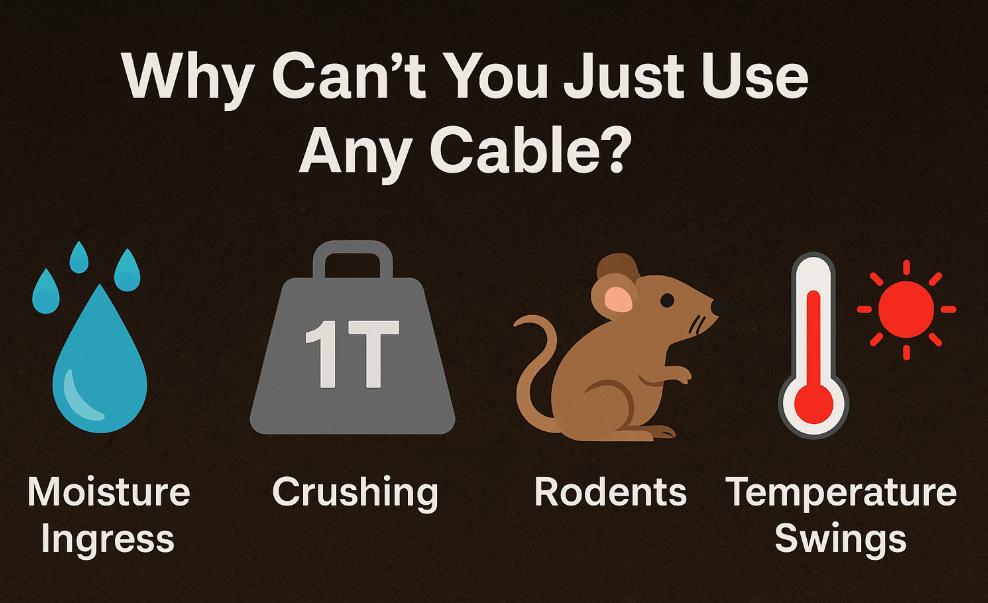
Standard indoor or aerial fiber optic cables are designed for controlled environments like walls, ceilings, or poles. Underground conditions are much harsher, exposing cables to constant pressure, moisture, and soil movement. Using the wrong type of cable would quickly lead to failure and costly downtime.
Here’s why ordinary cables don’t work underground:
Moisture Exposure: Groundwater and rain can seep into the jacket, leading to signal loss and corrosion.
Crushing and Soil Pressure: The weight of compacted soil or rocks can deform and damage delicate fibers.
Rodent Activity: Burrowing animals may chew through unarmored cable jackets.
Temperature and Soil Movement: Expansion and contraction during seasonal changes can stress the fiber core.
💬 Example: Installing a standard indoor fiber under a lawn might work for a short time — until moisture seeps in or soil pressure cracks the jacket. In contrast, a Baudcom armored direct burial cable is specifically engineered to survive these underground hazards for years.
Direct Burial vs. Conduit Burial: Which is Better?
You might be wondering, “If it’s so tough, why would anyone use a conduit?” It’s a valid question, and the answer lies in flexibility and future-proofing.
| Feature | Direct Burial Cable | Conduit Burial |
| Installation | Easier & Faster. A trench is dug, and the cable is laid directly in. | More Complex. A trench is dug, the conduit (pipe) is laid, and then the cable is pulled through it. |
| Cost | Generally Lower. Less material (no conduit) and less labor. | Higher. Cost of the conduit itself and the extra labor to install it. |
| Protection | Excellent. Built-in armor and water resistance. | Superior. The conduit provides an extra, physical barrier against all threats. |
| Future-Proofing | Poor. To upgrade the cable, you must dig again. | Excellent. Old cable can be easily pulled out and a new one pulled through without digging. |
| Best For | Long, straight runs under lawns, fields, and where future upgrades are unlikely. | Under driveways, roads, gardens, or anywhere you might want to upgrade the cable later without excavation. |
FAQ
- Does Fiber Optic Cable Have to Be Buried?
Not necessarily, but it’s by far the most common and recommended method for permanent, long-lasting installations. Burying fiber optic cables protects them from a host of surface-level dangers. While you might see fiber cables strung aerially on utility poles, for individual property runs from the street to your house (the “last mile”) or across a yard, burial is the standard. The choice often comes down to direct burial vs. burial in conduit.
- How Far Down Are Fiber Optic Cables Buried?
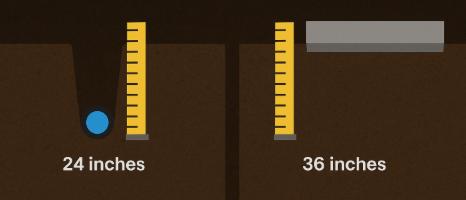
This is a critical question for both safety and cable integrity. The burial depth isn’t arbitrary; it’s often governed by local building codes and the National Electrical Code (NEC).
As a general rule of thumb:
- Standard Residential Burial Depth: For standard low-voltage communication cables like fiber optics, a typical depth is 12 to 24 inches (30 to 60 cm).
- Under Driveways or Roads: When going under areas with vehicle traffic, the requirement is deeper, usually at least 24 inches (60 cm).
- Utility-Installed Lines: The main “trunk” lines run by telecom companies might be buried even deeper, sometimes 36 inches or more.
- Can Direct Burial Cable Be Used Indoors?
Technically, it will work, but it is generally not recommended or code-compliant to use direct burial cable exclusively indoors.
Here’s why:
Fire Safety Codes: Cables designed for indoor use (known as CM, CMR, or CMP ratings) have specific fire-retardant jackets. They are designed to limit the spread of flames and produce less toxic smoke in the event of a fire. The polyethylene (PE) jacket on most direct burial cables does not have these same fire safety ratings and can be a fire hazard inside walls, plenums, or ceilings.
Conclusion
A direct burial cable provides a rugged and reliable solution for underground installations where conduit isn’t practical. While not every fiber optic cable must be buried, choosing the right type—and burying it at the correct depth—is essential for network longevity and performance. And although direct burial cable can be used indoors, it’s far safer and more efficient to switch to indoor-rated cabling at the entry point.
Whether you’re setting up a campus network or expanding fiber to remote locations, using the proper burial methods and materials ensures years of dependable service.
Related Article: Fiber Optical Cable: The Ultimate Guide


