
How many Types of fiber patch cordsFiber optic networks form the foundation of modern telecommunications, data centers, FTTH deployments, and enterprise networks. Whether you are building a GPON network, connecting switches in a data center, or installing fiber links between buildings, fiber patch cords play a critical role in ensuring reliable signal transmission. Many beginners ask: How many types of fiber patch cord are there? The answer depends on how you classify them. Fiber optic patch cords can be categorized based on fiber mode, connector type, polish type, fiber count, and application environment. In this guide, we will explain the most common fiber optic patch cord types and help you choose the right one for your network.
What Is a Fiber Patch Cord?
A fiber patch cord, also called a fiber jumper or fiber optic patch cable, is a length of optical fiber terminated with connectors at both ends. It is used to connect optical devices such as switches, routers, ODFs, patch panels, media converters, ONUs, OLTs, and transceivers.
Unlike permanent fiber cabling, patch cords provide flexible and removable connections, making installation, maintenance, and upgrades much easier.

How many Types of fiber patch cords Are There?
There is no single number because fiber patch cords can be classified in several different ways. The most common categories include:
- Single Mode and Multimode
- Connector Types
- Polishing Types
- Simplex and Duplex
- Specialized Types of Patch Cords
Let’s examine each category in detail.
Categorization by Fiber Mode
This is the most fundamental classification you will encounter, as it dictates the cable’s core size, light transmission characteristics, and primary application environment.
-
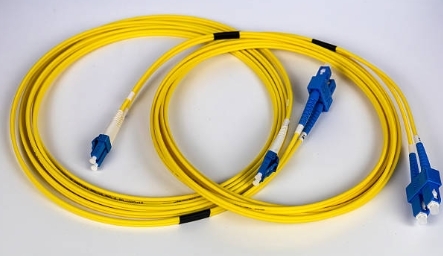
Single Mode Fiber Patch Cord
These cables feature an extremely small glass core, typically 9 micrometers in diameter, with a 125-micrometer cladding (9/125 µm). This tiny core allows only a single light ray, or mode, to propagate straight down the fiber, which virtually eliminates the risk of modal dispersion, where light pulses spread out and overlap over distance. Because the light travels in a single, direct path, signal attenuation is kept to an absolute minimum, enabling data transmission over very long distances—often reaching several kilometers or even tens of kilometers without requiring signal regeneration.
They are typically identified by a distinctive yellow outer jacket, which is a universal industry standard for easy visual identification in crowded cable trays and patch panels. These cords are the backbone of telecommunication networks, cable television (CATV) infrastructure, and long-haul data center interconnects, where maintaining signal integrity over vast geographic areas is a non-negotiable requirement.
-
Multimode Fiber Patch Cord
In contrast, these cables have a much larger core, commonly 50 or 62.5 micrometers in diameter, again paired with a 125-micrometer cladding (50/125 µm or 62.5/125 µm). This generous core diameter allows multiple light rays, or modes, to travel through the fiber simultaneously, each bouncing off the cladding at different angles. Although this design is highly efficient for short-range communication due to its support for lower-cost, lower-power light sources such as LEDs and VCSELs (Vertical-Cavity Surface-Emitting Lasers), it also introduces modal dispersion, thereby limiting the effective transmission distance.
Consequently, these patch cords are the go-to choice for applications within a single building, on a university campus, or in short-reach data center racks, where high bandwidth is needed over spans of a few hundred meters. Their jacket colors are not uniform but are strictly graded by performance level: orange indicates legacy OM1 and OM2 grades, aqua signifies high-speed OM3, and OM4 10Gig varieties, and violet (or sometimes lime green) denotes the latest OM5 “wideband” multimode fiber, which is optimized for emerging short-wavelength division multiplexing applications.
Read more:How to Identify Single Mode and Multimode Fiber Patch Cord?
Fiber Patch Cord Types by Connector
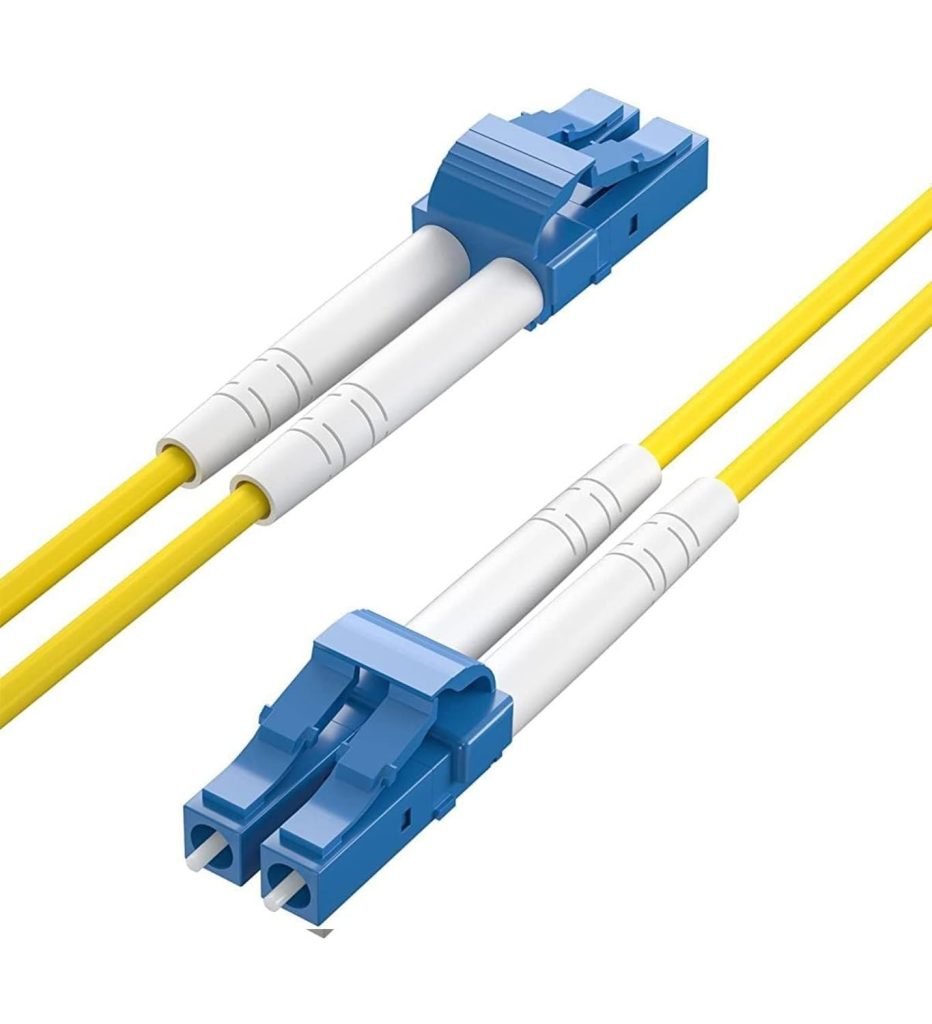
LC Fiber Patch Cord — This small form-factor connector is roughly half the size of its predecessors. It f
eaturing a compact 1.25mm ferrule and a convenient push-pull latch mechanism that locks firmly into place with an audible click. Its diminutive size allows for incredibly high-density port configurations, which is why it has become the undisputed industry standard for SFP, SFP+, and QSFP transceivers used in modern data centers.
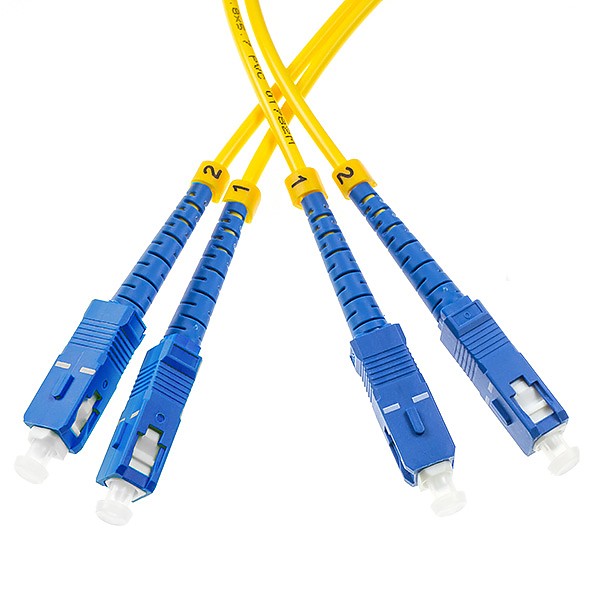
SC Fiber Patch Cord — Featuring a durable, square-shaped body and a 2.5mm ferrule, the SC uses a straightforward push-pull locking system that is incredibly intuitive and robust, making it extremely easy to insert and remove even in tight spaces. It offers excellent performance stability with low insertion loss, which is why it is a dominant connector type in Ethernet networks, GPON (Gigabit Passive Optical Networks) for FTTH, and broadband cable systems.
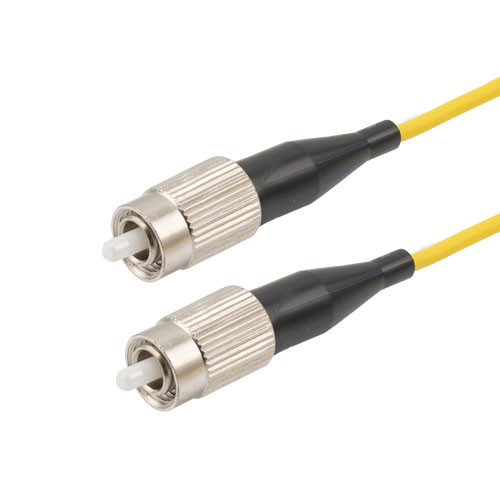
FC Fiber Patch Cord — This connector uses a 2.5mm ferrule held in place by a threaded metal collar that screws tightly onto the adapter port, providing an exceptionally vibration-resistant and stable connection. The screw-on design is not as quick to install as push-pull or bayonet styles, but it offers unparalleled mechanical stability, which is essential in high-vibration environments like factory floors, railway communications, and outdoor telecom cabinets.
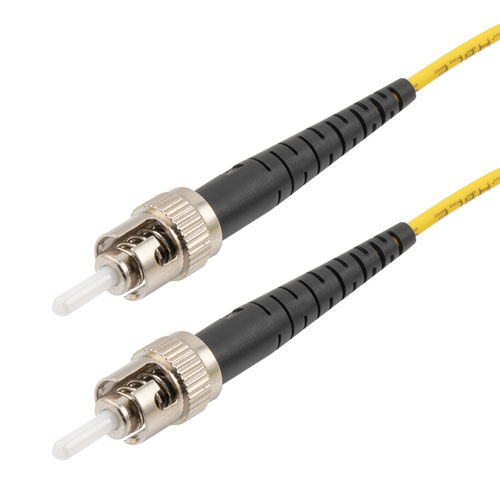
ST Fiber Patch Cord — This is an older but still widely deployed connector, characterized by a cylindrical 2.5mm ferrule and a spring-loaded bayonet-style twist-lock mechanism that requires a quarter-turn to secure. While it was once the standard for LANs and campus networks, its popularity has waned in favor of LC and SC, but you will still regularly encounter it in legacy multimode networks, industrial environments, and educational laboratory settings.
Fiber Patch Cord Types by Polishing Method
The polish on the end-face of the connector ferrule is not just a cosmetic detail; it determines the surface geometry and directly impacts signal reflection, which can degrade network performance.
UPC (Ultra Physical Contact): Featuring an even more precise, highly polished, and smoother dome-shaped finish with an extended radius of curvature. The superior surface smoothness and tighter geometrical tolerances of UPC result in a much lower back reflection (typically around -50 dB) compared to standard PC, making it the default choice for most modern single-mode networking applications.
APC (Angled Physical Contact): This polish takes a completely different approach by grinding the ferrule end-face at a precise 8-degree angle, which drastically redirects any reflected light away from the light source and into the cladding, where it is harmlessly dissipated. This angled geometry achieves exceptionally low return loss values, often better than -60 dB, which is critical for high-bandwidth applications that are sensitive to even microscopic reflections. These connectors are universally color-coded with a green jacket or connector housing to prevent accidental mating with UPC connectors, as mixing them can cause severe physical damage.

Cable Structure: Simplex and Duplex
This classification refers to the physical number of individual fiber strands enclosed within the cable’s outer protective jacket, which dictates the directionality and capacity of the data link.
Simplex Patch Cords: These contain a single, solitary glass fiber encased in its own protective jacket and strength members. They are terminated with one connector on each end, forming a simple, one-way communication path. Because they only support a single direction of transmission, they are typically used for applications that do not require simultaneous two-way data flow, such as connecting a monitoring device that only receives signals, or in specialized unidirectional data links.
Duplex Patch Cords: This is the most ubiquitous configuration in standard Ethernet networking, as it consists of two individual fibers, often joined side-by-side with a plastic clip or zip-cord construction for organizational neatness. Each end of the cord is fitted with two connectors, which are typically clipped together to maintain the correct transmit and receive orientation. This arrangement is essential because most modern network transceivers (like SFP modules) are designed with separate ports for transmitting and receiving data.

Simplex and Duplex patch cord
Specialized Types of Patch Cords
Beyond the standard categories, there is an entire ecosystem of specialty fiber optic patch cords engineered to solve unique environmental challenges.
Armored Fiber Patch Cords:
These innovative cables integrate a flexible, spiral-wound stainless steel tube or a woven steel armor layer directly beneath the outer PVC or LSZH (Low Smoke Zero Halogen) jacket. This robust internal armor provides an exceptional level of mechanical protection against crushing forces, heavy foot traffic, and even rodent gnawing, which are common hazards in industrial environments, under-floor cabling, and outdoor distribution panels. Despite their rugged construction, they remain surprisingly flexible and maintain standard connector compatibility, making them an excellent drop-in replacement in harsh conditions without requiring special equipment or adapters.
Bend-Insensitive Fiber Patch Cords:
These utilize a specially engineered optical fiber that features a trench-assisted refractive index profile around the core, which acts as an optical barrier to effectively confine light even when the cable is subjected to tight radius bends. This design innovation minimizes the signal loss (macro-bending loss) that traditionally occurs when standard fibers are bent around corners or routed through crowded cable management systems. They are an ideal solution for FTTH installations where the cable often needs to navigate tight corners within a home or apartment building, as well as in high-density data centers where space constraints force technicians to bend cables into sharp loops and tight radii.
Mode Conditioning Patch Cords:
These are highly specialized hybrid cords that incorporate a specific length of multimode fiber spliced to a single-mode fiber at the transmit connector end, with a precise offset built into the connection. Their sole purpose is to allow a single-mode transceiver to be used effectively over an existing legacy multimode cable plant by intentionally launching the laser light off-center from the single-mode connector into the multimode fiber. This offset launch technique minimizes the deleterious effect of differential mode delay, which would otherwise cause severe signal distortion and prevent the network from achieving its rated speed over multimode fiber.
How many Types of fiber patch cords Conclusion
In summary, there is no single, static number that answers the question “how many types of patch cords are there.” Instead, the total number is a compound product of all the variables we have discussed. Like, fiber mode, cable structure, connector type, polish style, and specialized construction features. The exact fiber optic patch cord types you need is determined by a complex interplay of your specific application requirements. Including the required transmission distance and data rate, the physical connectors present on your networking equipment, the environmental conditions of your installation site, and future scalability needs. By understanding these diverse categories, you can confidently navigate the vast landscape of fiber optic patch cords and select the perfect cable for your project.


