
If you work in data centers, telecom, or fiber optic networking, you have likely heard the acronyms MPO and MTP thrown around. But what exactly is an MPO/MTP connector? More importantly, the MPO/MTP connector is primarily used to address one critical problem: space constraints.
As bandwidth demands explode, traditional connectors (like LC or SC) simply cannot keep up. Enter the multi-fiber solution.
What is an MPO/MTP Connector?
Before we dive into usage, let’s clarify the alphabet soup. MPO (Multi-fiber Push On) is the standard defined by IEC 61754-7. MTP is a registered trademark of US Conec for a specific brand of MPO connector that offers improved mechanical performance.
When people search for MPO MTP, they are generally referring to the same physical shape—a rectangular connector that holds 12, 24, or even 48 fibers in a single ferrule.
However, understanding the MTP vs MPO connectors debate is crucial for procurement. Standard MPO connectors can have floating ferrule issues and lower cycle life. MTP connectors feature improved guide pins, metal pin clamps, and an elliptical spring design for better optical performance.
MPO MTP Connector Is Mainly Used For What?
The question many network engineers ask is: MPO MTP connector is mainly used for what applications?
The answer lies in environments that require high-speed, high-density fiber connectivity.
1. Data Centers
One of the most common uses of MPO MTP connectors is in data centers.
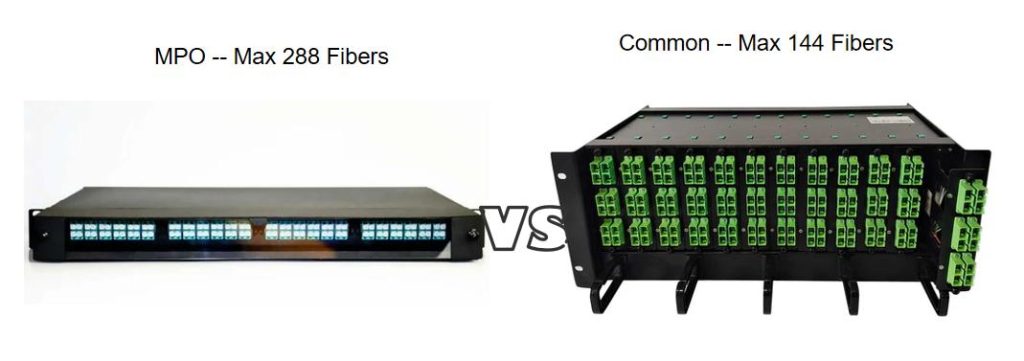
Modern data centers contain thousands of servers, switches, and storage systems that require massive amounts of bandwidth. In data centers, running 144 individual fibers across the room is a nightmare. Technicians use trunk cables with MPO/MTP connectors on the ends. A single 24-fiber MPO trunk handles the same traffic as 12 duplex LCs but takes up 1/10th of the rack space. MPO MTP cabling enables administrators to connect large numbers of fibers in a compact space while simplifying cable management.
As data centers migrate from 10G to 40G, 100G, 400G, and 800G networks, MPO MTP solutions have become increasingly important.

2. High-Speed Ethernet Networks
MPO MTP connectors are widely used in high-speed Ethernet applications, including: 40GBASE-SR4, 100GBASE-SR4, 200G Ethernet, 400G Ethernet, or 800G Ethernet.
Unlike traditional LC connectors that use two fibers, these high-speed standards often require multiple transmit and receive fibers. Modern optics like QSFP28 (100G) and QSFP-DD (400G) cannot use standard LC duplex cables. They require 8 or 12 fibers to transmit and receive data simultaneously. The MPO/MTP interface is the industry standard for plugging into these high-speed modules.
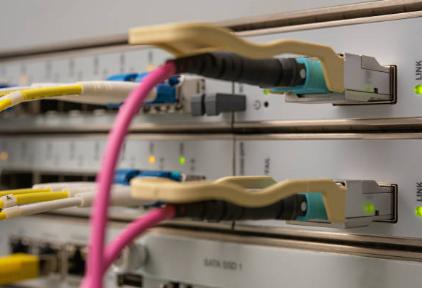
3. Fiber Backbone Cabling
Enterprise buildings, campuses, and telecommunications facilities frequently use MPO MTP systems for backbone infrastructure.
Instead of pulling multiple duplex fiber cables through pathways, technicians can deploy a single MPO trunk cable containing dozens of fibers. This approach reduces installation time and simplifies future network upgrades.
4. Cloud Computing Facilities
Cloud service providers manage enormous amounts of data traffic every day.
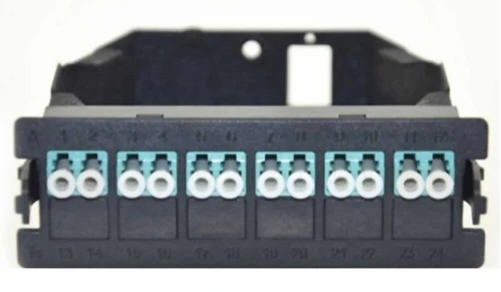
MPO MTP connectivity allows cloud infrastructure to scale quickly while maintaining reliable optical performance. High-density fiber cabling helps maximize rack space and supports rapid deployment of additional servers and networking equipment. Installers use pre-terminated MPO/MTP cassettes. These cassettes break out the multi-fiber MPO into individual LC or SC ports for servers.
5. AI and HPC Clusters
Artificial intelligence (AI) computing clusters and high-performance computing (HPC) environments generate enormous amounts of east-west traffic between servers.
MPO MTP cabling provides the high-bandwidth optical links necessary to support low-latency communication between GPUs, storage systems, and networking switches.
As AI infrastructure expands globally, demand for MPO MTP solutions continues to grow rapidly.
Advantages of MPO MTP Connectors
The popularity of MPO MTP technology comes from several significant benefits.
- High Fiber Density
Perhaps the biggest advantage is high density.
Instead of connecting only one or two fibers, MPO MTP connectors can support many fibers simultaneously. This dramatically increases the amount of bandwidth that can be delivered through a limited physical space.
For crowded equipment racks and large data centers, this is a major benefit.
- Faster Installation
Installing dozens of duplex cables individually requires significant labor and increases the possibility of human error.
Pre-terminated MPO assemblies allow technicians to install multiple fiber connections in one step, reducing deployment time considerably.
This also lowers installation costs and shortens project schedules.
- Reduced Cable Management Challenges
Large bundles of duplex cables can quickly become difficult to organize and maintain.
MPO trunk cables consolidate many fibers into fewer physical cables, creating cleaner cable pathways and making troubleshooting much easier.
Better cable management also improves airflow inside equipment racks, helping cooling systems operate more efficiently.
- Future-Proof Design
Modern networks rarely remain unchanged for long.
Organizations often upgrade from 10G to 40G, then to 100G, 400G, or even 800G Ethernet as bandwidth demands increase.
An MPO-based cabling infrastructure provides flexibility for these upgrades without requiring a complete replacement of the existing fiber plant.
This protects long-term investment and reduces future deployment costs.
MTP vs MPO Connectors: What’s the Difference?
It’s All About the Spring
Here is the secret that engineers know but buyers often miss: Both MPO and MTP connectors have springs.
When you plug an MPO connector in, the entire ferrule (the plastic block holding the fibers) “floats” on that spring. This helps it align, but it also means the ferrule can tilt or retract slightly when you push it in. If there is dust on the end-face, that tilting can scratch the glass or push the fibers out of focus.
MTP solves this with a “floating” design that isn’t sloppy. The MTP ferrule is held by a metal pin clamp and an elliptical spring that keeps constant, even pressure. This means:
The fibers stay perfectly flat against each other every single time.
The metal guide pins are hardened steel, so they don’t wear down after 200 plug-ins.
| Feature | Standard MPO | MTP (High-Performance) |
| Ferrule Float | Yes (wobbly under pressure) | No (Rigid, precision floating) |
| Guide Pins | Stainless steel (wear out) | Hardened stainless steel |
| Durability | ~200 mating cycles | ~1,000+ mating cycles |
| Removal | Standard pull tab | Push-pull boot available |
| Best For | Static Backbone links | Active Patching / Testing labs |
If you are building a permanent backbone that will be patched once and never touched again—save money and buy Standard MPO.
But if you are building a Data Center MDA (Main Distribution Area) where techs are moving patch cords daily to reconfigure servers, the standard MPO’s pins will wear out in 6 months. The MTP will last 5 years. That is the MTP vs MPO difference in a nutshell: Longevity under pressure.
Conclusion
To summarize, the MPO MTP connector is mainly used for high-density fiber optic communication in data centers, cloud computing platforms, telecommunications networks, enterprise backbone cabling, and AI computing environments.
Their ability to connect multiple fibers through a single interface reduces cable congestion, speeds installation, and supports the ever-growing bandwidth demands of modern networks.
Understanding MTP vs MPO connectors and the key MTP MPO difference helps network designers choose the right solution for their specific applications. While standard MPO connectors provide excellent performance for many deployments, premium MTP connectors offer enhanced optical accuracy, lower insertion loss, and greater reliability for demanding high-speed networks.
As the industry continues moving toward 400G, 800G, and future terabit technologies, MPO MTP connectivity will remain a cornerstone of scalable and efficient fiber optic infrastructure.


