
In modern fiber optic communication systems, the cleanliness of connectors directly affects network stability and transmission quality. A tiny dust particle on the fiber end face can significantly increase insertion loss or even interrupt the optical link entirely. This problem becomes even more critical in high-density cabling systems that use MPO fiber connectors.
Unlike traditional single-fiber connectors, MPO connectors contain multiple fibers inside one ferrule. Because several optical channels share the same connection surface, contamination can affect many fibers simultaneously. Improper cleaning methods may also scratch the ferrule, damage guide pins, or permanently reduce optical performance.
This guide explains what is an MPO connector, why proper maintenance matters, and how to clean MPO connectors safely without damaging the ferrule surface.
Table of Contents
- What Is an MPO Connector?
- Why Cleaning MPO Connectors Is Important
- Common Mistakes That Damage MPO Ferrules
- Step-by-step cleaning procedures
- Best Practices for Protecting MPO Connectors

What Is an MPO Connector?
Before learning the cleaning process, it is important to understand what is an MPO connector and why it requires more careful handling than standard fiber connectors.
An MPO (Multi-fiber Push-On) connector is a high-density fiber optic connector designed to combine multiple optical fibers into a single compact interface. Instead of supporting only one fiber like LC or SC connectors, MPO connectors can support multiple fibers simultaneously, allowing much higher port density and faster deployment in large optical networks.

Why Cleaning MPO Connectors Is Important
Because MPO connectors handle multiple optical signals at the same time, their ferrule alignment must be extremely precise. Even very small contamination particles can block or scatter light across several fiber channels. This is why MPO connectors require specialized cleaning tools and proper maintenance procedures.
Many fiber optic problems are caused by dirty connector end faces rather than equipment failure. Dust, oil, and residue on MPO connectors can seriously affect optical performance and create unstable network conditions.
In high-speed networks such as 100G and 400G Ethernet, signal tolerances are very small. A minor contamination issue that might not affect a lower-speed connection can become a major problem in high-bandwidth systems.
Since MPO fiber connectors contain multiple fibers within one ferrule, contamination on one section can impact multiple channels at once. In some cases, one dirty MPO connector can disrupt an entire data link or backbone connection.
Regular cleaning also helps extend the lifespan of the connector and prevents long-term ferrule wear.
Common Mistakes That Damage MPO Ferrules
Many MPO connector failures occur during improper cleaning rather than during normal operation. Using the wrong cleaning method can permanently damage the ferrule surface.
Using Regular Cloth or Tissue
Ordinary tissues and fabric materials are not designed for fiber optic cleaning. They often contain lint, dust, or rough fibers that can scratch the ferrule.
Even soft-looking materials may leave microscopic particles on the connector surface.
Applying Too Much Pressure
Some technicians mistakenly believe stronger pressure improves cleaning results. In reality, excessive force can scratch the ferrule or damage the fiber end face.
MPO ferrules should always be cleaned using light and controlled pressure.
Cleaning Without Inspection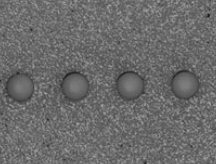
Cleaning a connector without inspection can spread contamination across the ferrule. For example, hard dust particles may drag across the fiber cores and create scratches.
Inspection helps determine whether dry cleaning or wet cleaning is required.
This is an example of what you are aiming for an MPO connector.You need to pan left or right to see the additional endfaces on the connector you are inspecting.
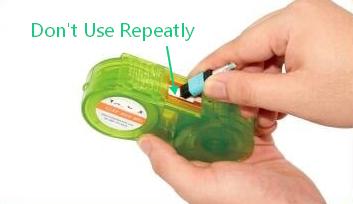
Reusing Dirty Cleaning Tape
Cleaning tapes and wipes have limited usable areas. Reusing contaminated sections can transfer debris back onto the connector.
Always use a fresh cleaning area for each connector.
Using Excessive Alcohol
Applying too much alcohol can leave residue after evaporation. In some cases, liquid may enter the connector assembly and attract additional dust.
Only a very small amount of high-purity alcohol should be used when necessary.
| Tool | Safe for MPO? | Why? |
| Cotton swab (Q-tip) | ❌ No | Leaves lint, fibers get caught between ferrule rows |
| Canned air | ❌ No | Propellant residue; can drive particles into ferrule guide holes |
| LC/SC 1.25mm reel cleaner | ❌ No | Too narrow; doesn’t cover full ferrule width |
| Dry tissue or shirt sleeve | ❌ No | Causes static charge and scratches |
| MPO cassette cleaner | ✅ Yes | Designed for full-ferrule contact |
| MPO-specific lint-free wipes | ✅ Yes | Non-abrasive, high absorbency |
| Optical-grade isopropyl alcohol (99.5%+) | ✅ Yes | Leaves no residue, evaporates quickly |
Step-by-step cleaning procedures
Cleaning MPO connectors correctly requires patience and proper technique. Rushing the process often causes more damage than the contamination itself.
Step 1: Inspect the Connector First
Inspection should always be the first step before cleaning any MPO connector. Inspection helps technicians identify whether cleaning is necessary and prevents unnecessary contact with the ferrule surface. In some cases, a connector may already be physically damaged, and cleaning will not solve the issue.
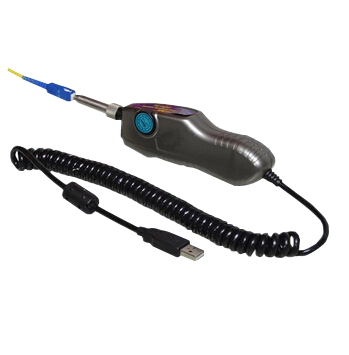
Fiber Microscope Probe
Step 2: Use Dry Cleaning First
Dry cleaning is generally safer than wet cleaning and should always be attempted first. Using an MPO cleaning cassette or one-click cleaner reduces the risk of liquid residue and minimizes ferrule contact.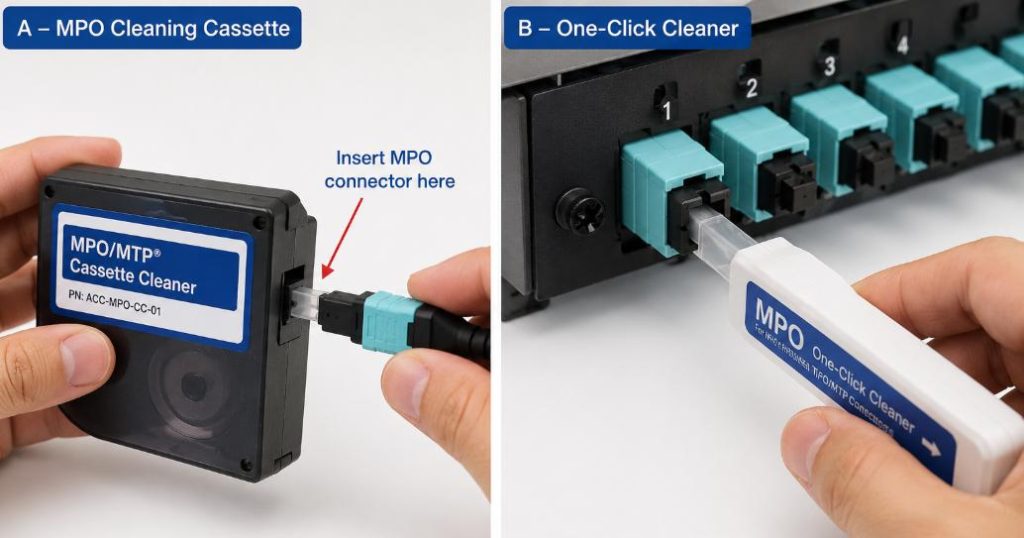
Proper Dry Cleaning Procedure
- Carefully remove the dust cap.
- Hold the connector steadily without touching the ferrule.
- Place the ferrule lightly onto the cleaning surface.
- Move the connector smoothly in one direction only.
- Avoid repeated back-and-forth movement.
For one-click cleaners:
- Insert the cleaner carefully into the MPO interface.
- Push until the tool clicks once.
- Remove the cleaner slowly.
Do not apply excessive pressure. The cleaning material is designed to work with gentle contact.
Step 3: Inspect Again After Dry Cleaning
After dry cleaning, inspect the connector again using the microscope.
In many cases, dry cleaning alone completely removes contamination.
If particles or oil residue remain, wet cleaning may be required. Reinspection prevents unnecessary repeated cleaning and reduces ferrule wear over time.

Step 4: Perform Wet-to-Dry Cleaning if Necessary
Wet cleaning should only be used for stubborn contamination, such as oil or dried residue.
Correct Wet Cleaning Method
- Apply a very small amount of alcohol to a lint-free wipe.
- Create one wet area and one dry area on the wipe.
- Gently move the MPO ferrule from the wet section toward the dry section in one smooth motion.
Avoid circular scrubbing motions. This wet-to-dry method helps dissolve contamination while preventing solvent residue from remaining on the ferrule.
Using too much liquid may actually increase contamination risk.
Best Practices for Protecting MPO Connectors
Always Use Dust Caps
Dust caps provide basic protection against airborne contamination.
However, dirty dust caps can also transfer contamination, so caps should be kept clean and replaced when necessary.
Avoid Touching the Ferrule
Human skin oils are extremely harmful to optical connections.
Technicians should never touch the ferrule surface directly, even briefly.
Store Connectors in Clean Environments
Proper storage reduces exposure to dust, moisture, and airborne particles.
Connectors should be kept sealed when not in use.
Use Dedicated MPO Cleaning Tools
MPO connectors require specialized cleaning equipment designed for multi-fiber ferrules.
Using LC or SC cleaning tools may result in incomplete cleaning or physical damage.
Train Technicians Properly
Incorrect cleaning techniques remain one of the leading causes of MPO connector failure.
Proper technician training improves network reliability and reduces maintenance costs.
Conclusion
Understanding what is an MPO connector and learning proper cleaning procedures is essential for maintaining reliable high-speed optical networks.
Because MPO connectors contain multiple fibers inside one precision ferrule, improper cleaning can easily damage the connector and affect several optical channels at once.
To safely clean MPO fiber connectors without damaging the ferrule:
- Always inspect before cleaning
- Use dry cleaning first
- Apply only light pressure
- Use proper MPO cleaning tools
- Avoid excessive alcohol
- Reinspect after cleaning
Consistent maintenance practices help reduce insertion loss, prevent ferrule damage, extend connector lifespan, and ensure stable optical communication in modern fiber networks.
Have you ever damaged an MPO ferrule during cleaning? What happened, and what did you learn? Share your story in the comments below.


