
In the high-speed world of fiber optic communication, where milliseconds matter and reliability is non-negotiable, the unsung heroes behind the scenes are fiber optic splicer. These technicians work with microscopic precision to ensure every fiber link is flawlessly connected, forming the backbone of global internet, telecommunication, and enterprise networks. But what exactly does a fiber splicer do? And what does a typical day look like for someone whose job is to turn “split ends” into seamless signals?

Morning: Prepping for the Field
A fiber splicer’s day often begins early. Whether they’re working on a new FTTH (Fiber to the Home) rollout or repairing damage after a storm, preparation is key. Their van is typically loaded with:
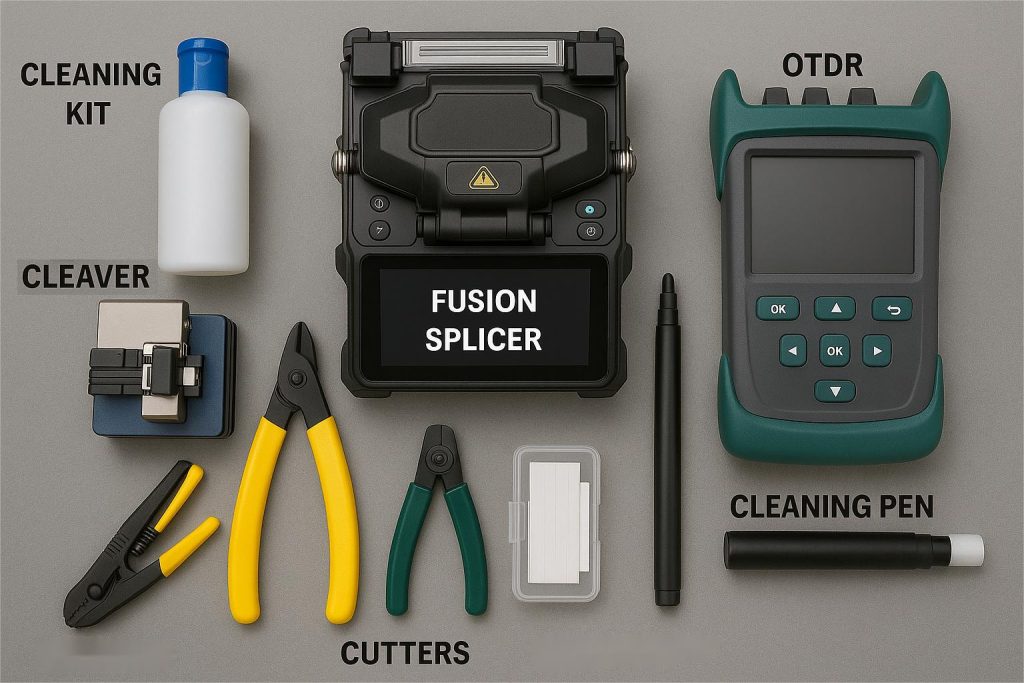
The main fusion splicer machine tools kid
- Fusion Splicer machine
- Fiber cleavers and strippers
- OTDRs (Optical Time-Domain Reflectometers)
- Cleaning kits and protective sleeves
- Safety equipment and worksite signage
At the start of the shift, splicers review work orders and fiber routing diagrams. In large-scale installations, they may be coordinating with network engineers or construction crews. Accuracy in planning avoids costly signal loss or downtime later.
Midday: The Precision Work Begins
Once on site, the real craftsmanship begins. Fiber splicers often work in utility cabinets, aerial enclosures, or underground vaults—sometimes in cramped, dusty, or poorly lit environments. Every fiber must be:
- Cleaned meticulously– even a speck of dust can compromise the splice.
- Stripped and cleaved– to expose the core with minimal loss.
- Fusedusing high-precision arc welding – aligning cores to within microns.
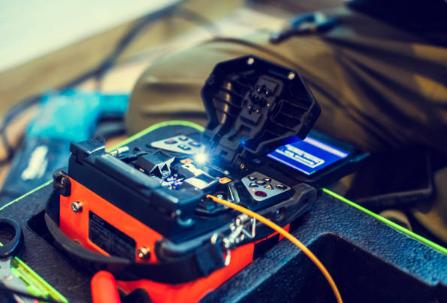
Fusion splicing offers the lowest insertion loss and reflection, making it the go-to technique for long-haul and high-speed networks. Once the splice is complete, the fiber is tested using an OTDR to ensure minimal signal loss and then protected with a heat-shrink sleeve.
Afternoon: Testing, Troubleshooting, and Documentation
Testing is not optional—every splice must meet strict industry performance standards. If signal loss is too high, the fiber may need to be re-spliced. Troubleshooting can also involve tracing network faults or diagnosing attenuation in legacy lines.
Once the technical work is done, fiber optic splicer update digital records and submit documentation.
 This includes:
- Splice maps
- OTDR test reports
- GPS-tagged site photos
- Compliance forms (for ISPs or government infrastructure)
Evening: Why Their Work Matters
By the end of the day, a fiber splicer’s work might seem invisible – but it’s anything but. Every splice they complete:
- Boosts internet speeds for thousands of users.
- Prevents data bottlenecks in 5G networks, hospitals, or financial systems.
- Future-proofs infrastructure for emerging tech like AI and IoT.
As one splicer joked: “We’re the internet’s ER doctors – no one notices us until something breaks.”
Conclusion: Unsung Heroes of the Digital Age
Next time you stream a movie or join a video call without a hiccup, remember What does a fiber splicer do? The fiber splicers who turned “split ends” into seamless signals. Their blend of technical expertise, steady hands, and problem-solving grit keeps our world connected – one flawless fusion splice at a time.
FAQ: Quick Fiber Splicer Insights
Q: How long does it take to splice a fiber?
A: A single fusion splice takes 2–5 minutes, but complex repairs can take hours.
Q: Do fiber splicers need certifications?
A: Yes! Most complete programs like CFOT (Certified Fiber Optic Technician).
Q: Is AI replacing fiber splicers?
A: Not yet – human precision and adaptability are still irreplaceable in the field.
Keep Learning
Related article: Everything You Need to Know about Fusion Splicer?
Futher read: Splicing Fiber Optic Cable Without Machine: Understanding Mechanical Splicing


