
-
 Have you ever wondered where your emails actually live, where streaming services store thousands of movies, or how millions can use the same app simultaneously? While we talk about “the cloud,” the physical reality is more fascinating: massive, highly secure facilities called data centers. These technological powerhouses operate 24/7, forming the critical infrastructure that makes modern digital life possible. In this comprehensive guide, we’ll explore exactly What is Data Center For, How does data center work, and why they’re absolutely essential to everything from global commerce to your daily social media use. What Is a Data Center? A data center is a specialized facility designed to house an organization’s most critical computing infrastructure—servers, storage systems, networking equipment, and the supporting power, cooling, and security systems. Think of it as the central nervous system of the digital world, where data is processed, stored, and distributed globally. What is Data Center For ? Why Data Centers are Vital? Data centers are the indispensable foundation of our modern existence. Here’s why their importance cannot be overstated: 1. They Are the Physical “Cloud.” The “cloud” is a metaphor. When you save a file to iCloud or stream a movie on Netflix, you’re not storing it in the sky—you’re accessing a server in a data center. Without these facilities, the cloud, and all the convenience it offers, simply wouldn’t exist. 2. They Power the Global Economy. Every digital transaction—from online banking and stock trading to e-commerce checkouts and payroll processing—flows through a data center. They are the transactional hearts of commerce, enabling businesses to operate 24/7/365 across the globe. 3. They Enable Our Connected Lives. From the moment you wake up and check your phone to your evening video call with family, data centers make it happen. Social media, search engines, video streaming, online gaming,…Read more →
-
Fiber optic patch cord, also called fiber optic patch cable of fiber optic jumper cable, is mainly used to connect one electronic device to another. Fiber optic patch cord can be divided into different types according to mode, structure, connector types (patch cord SC LC), connector polishing types, and it is similar to fiber optic cables. Today we will talk about it Mode & Structure There are two types of mode, single mode patch cord and multimode patch mode. Single mode patch cord uses 9/125um glass fiber, while multimode patch cord uses 62.5/125um or 50/125um glass fiber. Single mode patch cord is normally used in long distance data transmission, while multimode patch cord is normally used in short distance data transmission. The jacket color of single mode patch cord is usually yellow, while the jacket color of multimode patch cord is usually orange or aqua. And for the structures, fiber patch cables also has two types, simplex patch cord and duplex patch cord Simplex patch cord has one fiber and one connector at each end. Duplex patch cord has two fibers and two connectors at each end. Connector Types LC LC stands for Lucent Connector. LC connectors have high density connections, and are usually connected with SFP, SFP+ and XFP transceivers. LC connectors adopt the traditional components of the SC duplex connector, so it has independent ceramic ferrules and shells, and the size is reduced by half. It is widely used in dense installations and has high performance, so it is very suitable for single mode applications. SC SC stands for Subscriber Connector. SC connectors are becoming more and more popular in single mode optical fiber telecommunication, and are used in EPON and GPON. It has a high precision ceramic ferrule structure, which is the reason why it is the best…Read more →
-
Let’s talk about how the internet actually gets to your house. You know that super-fast fiber internet you keep hearing about? Well, it doesn’t just magically appear in your router. It travels most of the way underground or on poles, and then makes one final leap to your home through something called a fiber drop cable. Think of it as the last mile delivery person for your internet — but instead of a package, it’s delivering light signals packed with your Netflix shows, Zoom calls, and TikTok videos. Table of Contents What is Fiber Drop Cable? What’s Inside? Types of Fiber Drop Cables How Does It Get to You? The Installation Story Conclusion What is Fiber Drop Cable? Drop Cable Definition Imagine the internet is a river of data flowing through your town. That river is the main fiber line, often buried under streets or strung between utility poles. When it’s time to bring that river to your house, you don’t need the whole river — you just need a small hose. A fiber drop cable is that hose. It’s a small, tough, flexible cable that branches off the main network and connects directly to your home. Inside, it has one or two optical fibers — threads of glass so thin they’re about the width of a human hair — that carry information using pulses of light. The Technical Definition: Fiber drop cable is a type of fiber optic cable used to connect a fiber distribution point—such as a fiber optic terminal or splitter—to the end user’s premises. It is the last section of the fiber optic network, delivering the high-speed data to homes, businesses, and other end users. Unlike the main fiber trunk cables, which are designed for long-distance transmission, fiber drop cables are designed for short distances, typically spanning from 50…Read more →
-
When working with fiber-optic networks, measuring the power of optical signals is crucial for ensuring the system operates efficiently and with minimal loss. One essential tool for this task is the optical power meter. But for beginners, the question often arises: how to read an optical power meter correctly? This guide will walk you through the basics of using an optical power meter, explain what these meters measure, and provide you with a step-by-step process to help you get the most out of your measurements. What Do Optical Power Meters Measure? Before diving into how to read an optical power meter, it’s important to understand what it measures. Optical power meters are designed to measure the amount of optical power (light) passing through a fiber-optic cable, typically in units of dBm (decibels milliwatts) or µW (microwatts). This measurement ensures the optical signal is neither too weak to cause data loss nor too strong to risk damaging the fiber or equipment. Optical power is essential in fiber-optic communication systems. If the power is too low, signal degradation and data loss can occur, and if the power is too high, the receiver can become saturated, causing data errors and link failure. By measuring optical power, you can ensure that your fiber-optic network is functioning within optimal parameters. This measurement is critical for several reasons: Ensuring Signal Strength: It verifies that the signal is strong enough for the receiver to understand, but not so strong that it damages the equipment. Calculating Loss (Attenuation): When used with a light source, an OPM can measure how much signal power is lost over the length of a fiber link due to splices, connectors, or bends . Troubleshooting: It helps technicians identify faulty components or breaks in the network . Decoding the Display: Units and Wavelengths When…Read more →
-
 An Optical Time Domain Reflectometer (OTDR) is a precision instrument that serves as the eyes and ears of any fiber optic technician. By analyzing backscattered light from high-speed pulses, it detects faults, measures loss, and characterizes the entire length of a fiber link . For both installation and maintenance, understanding your OTDR is crucial for ensuring network reliability. However, for those new to the technology, the list of specifications on a data sheet can look like a foreign language. Dynamic range, dead zones, pulse width—what do they all mean, and more importantly, how do they affect your real-world testing? This FAQ guide breaks down the key OTDR specifications you must understand to choose the right tool and get accurate results every time. What is OTDR? Understanding the Basics Before diving into specifications, it’s essential to understand the OTDR definition. An Optical Time Domain Reflectometer is an optoelectronic instrument used to characterize optical fibers . It works by injecting a series of optical pulses into the fiber and measuring the light that is backscattered (via Rayleigh scattering) or reflected back from points along the fiber . This returned signal creates a visual representation called a “trace” or “signature,” which reveals the fiber’s attenuation, splices, connectors, and faults . Key OTDR Specifications Explained 1. What is Dynamic Range and Why Does It Matter? What is it? Dynamic range is arguably the most fundamental OTDR specification. It represents the maximum amount of optical loss (measured in decibels, dB) the OTDR can measure along a fiber, from the point where the pulse enters to where the backscatter signal disappears into the noise floor . Think of it as the instrument’s “seeing distance.” Why does it matter? A higher dynamic range allows you to test longer fiber spans and still see events (like splices or connectors) clearly…Read more →
-
preformed tension clamp introduction, dead end guy adss cable tension clampRead more →
-
ONU converts fiber-based optical impulses to electrical signals. Individual subscribers receive these electrical impulses. Between ONU and the end user’s premises, there is usually a distance or other access network. ONU can also send, collect, and groom various sorts of data from customers and deliver it upstream to the OLT. Grooming is the process of optimizing and reorganizing a data stream to make it more efficient to provide. The OLT supports bandwidth allotment, which enables the smooth delivery of data float to the OLT, which is typically delivered in bursts from the consumer. ONUs can be connected using twisted-pair copper wire, coaxial cable, optical fiber, or Wi-Fi, among other technologies and cable types. 4/8 Ports POE Dual Band XPON ONU Why choosing this ONU? There are so many different types of ONU, why choosing this ONU? First of all, and most importantly, it is a XPON ONU, so it can support both EPON and GPON interface, with EPON PX20+ and GPON Class B+. It has 4GE or 8GE 10/100/1000Mbps ports. The transmission distance will be at 20 km, and the speed of GPON will be at uplink 1.244Gbps, downlink 2.488Gbps; the speed of EPON will be at symmetric 1.25Gbps. One of the most significant features is that this is an PoE ONU, it is to say the BD-ONT-118EW-ac series ONU are ICT with PoE function, currently mainly “-PSE” power supply products. With PoE function, you can use CCTV IP camera connecting with this onu. Another important feature is that this PoE ONU is a dual band wifi onu. Many people would wonder that is dual band wifi better than single band, or are dual band routers better? It is better to have more choices. With this dual band ONU, you can use both 2.4G and 5G wifi, and it also supports 802.11ac, built-in AP, and WiFiac to improve effective coverage. What’s…Read more →
-
An anchor fiber tension clamp is a device used in the installation and maintenance of fiber adss cables or fiber drop cables. The fiber cable tension clamps are designed to secure and tension fiber optic cables to a support structure, such as a utility pole or a building, to prevent excessive sagging and to ensure the proper performance of the optical fibers. Fiber tension clamp key features and functions: Optical Fiber Cable Support: These clamps are specifically designed to support and hold fiber optic cables in place. They are used to prevent the cables from hanging too low, which could lead to damage or signal loss. Tensioning: Tension is important for fiber optic cables to maintain signal integrity. Fiber optic anchor tension clamps are adjustable to provide the appropriate tension on the cable, ensuring it is not too loose or too tight. Adjust Fiber cable tension: Many tension clamps are adjustable, allowing technicians to fine-tune the tension as needed during installation or maintenance. Easy Installation: They are typically designed for easy installation and can be attached to various types of support structures, such as poles, walls, or brackets. Strain Relief: Some tension clamps may also provide strain relief to protect the fiber optic cables from excessive bending or pulling, which can damage the fragile optical fibers inside. Material: These clamps are usually made from durable materials that are resistant to environmental factors like weather, UV radiation, and temperature changes. Compatibility: Fiber optic anchor tension clamps are designed to be compatible with different types and sizes of fiber optic cables. They should be selected based on the specific cable diameter and installation requirements. Conclusion: Properly installed fiber optic anchor tension clamps help ensure that fiber optic cables maintain their performance and reliability over time. They play a crucial role in maintaining…Read more →
-
What is Fiber Patch Panel ? Fiber Patch Panel,called Fiber Distribution Panel, is one of the commonly used cable managers. Fiber Distribution Panel makes it easy to manage cables and identify fiber optic cable routes. Faced with various fibre optic panel on the market, How to Choose a suitable Optical Fiber Patch Panel? This article will give you some reasonable suggestions from the key points. Click here to Get some types of Fiber Distribution Panel … Part I. What is Fiber Patch Panel ? What is Fiber Patch Panel ? Fiber patch panel, is mainly used for terminations connectors and patching of optical fiber cable. Through fiber distribution panel, network technicians can control massive connection points and optical fibre cables in a distribution panel. Therefore, it is simple and convenient to manage and maintenance cable by using fibre distribution panel. Fibre optical distribution panel is mainly used for data center rack cable management. it consists of two parts: patch panel and enclosure. The rack mounted fibre distribution panel is much more popular in high density cabling data centers, because of its larger capacity and versatility. Fiber Distribution Panel – What types does it have ? The types of rack mounted fiber distribution panel have cover removable type, slide-out type and swing-out type. Generally, the slide-out type and swing-out type are more expensive than the cover removable type , but with these two types, during install and maintenance cable you can benefit a lot, because you can gain internal access without removing do the whole enclosure from the rack, which can save time and energy. Part II. How to Choose Fiber Patch Panel ? Fiber Patch Panel – How to Choose it ? Step 1: Know the Size of Fiber Distribution Panel The width of fibre optic distribution…Read more →
-
When it comes to overhead power transmission and distribution, ensuring that the lines remain secure and properly tensioned is crucial for maintaining safety and reliability. One key component that plays a significant role in this process is the preformed suspension clamp. These clamps are specifically designed to suspend overhead conductors, ensuring they stay securely in place under varying mechanical stresses and weather conditions. In this blog, we will dive into what preformed suspension clamps are, their importance in overhead line systems, their benefits, and the different types available. What is a Preformed Suspension Clamp? A preformed suspension clamp is a fitting used to suspend and support overhead cables—such as ADSS (All-Dielectric Self-Supporting) fiber optic cables or OPGW (Optical Ground Wire)—on transmission poles and towers. Unlike older, rigid clamps that bolt directly onto the cable, preformed clamps feature a helical design that gently but firmly grips the cable. Think of it as a high-tech, precision-engineered set of “arms” that holds the cable without crushing it. It is specifically designed for what engineers call “strain relief,” ensuring the cable maintains its proper sag and tension between poles . Clamp: What’s Inside? The magic of this device is in its construction. A typical preformed suspension clamp set is made up of several key components working in harmony : Inner Preformed Rods (Armor Rods): These helical rods wrap directly around the optical cable or conductor. Made of aluminum alloy or galvanized steel, they act as a protective, cushioning layer against crushing forces. Outer Preformed Rods: These wrap over the inner rods to provide the primary gripping strength needed to support the cable’s weight and dynamic loads. The Suspension Housing (Clamp Body): This rigid outer shell, usually made of high-strength, corrosion-resistant cast aluminum alloy , houses the assembly and connects to the pole. Rubber Inserts…Read more →
-
In the world of telecommunications, power distribution, and renewable energy, securing cables and wires to poles, towers, or other vertical structures is crucial for maintaining system stability and performance. One of the most essential components in this process is the anchoring clamp pole bracket. In this blog, we’ll dive into the details of what an anchoring clamp pole bracket is, its usage instructions, installation tips, application scenarios, and frequently asked questions. What is an Anchoring Clamp Pole Bracket? An anchoring clamp pole bracket is essentially a device that attaches cables to poles or towers, ensuring that they remain stable and secure. Think of it like a “bracket” or “clamp” that holds the cable firmly in place, so it doesn’t move, sag, or break from environmental pressures (like wind, rain, or snow). These brackets are made of strong materials like galvanized steel, aluminum, or stainless steel, allowing them to withstand harsh weather and other stresses. The main function of this bracket is to evenly distribute pressure along the cable, which helps avoid damage to the cable insulation or internal fibers—especially for sensitive cables like fiber optics, which require extra care. How Does the Anchoring Clamp Pole Bracket Work? The anchoring clamp pole bracket functions by securing cables (such as fiber optics, copper wires, or power lines) to a pole or tower, holding them firmly in place to prevent sagging or shifting. Fiber optic cables are very sensitive, so the clamp provides a tight but gentle grip to avoid crushing or damaging the fibers inside. Power lines or high-voltage cables, on the other hand, are much thicker and need stronger brackets capable of handling greater tension and weight. In either case, the anchoring clamp keeps the cable taut and safe, ensuring that the cable continues to function without damage, especially when…Read more →
-
A fiber media converter is a simple but effective device that converts fiber optic and other types of media. POE Media Converter are most commonly used to transmit data between fiber and copper in order to extend a network or add fiber optic cabling into a copper based network. Because these media converter with poe can be deployed practically anywhere in the network and are inexpensive, they are also being used for a variety of additional purposes. More about fiber media converter, please check here. 10/100M POE Fiber Media Converter What is PoE Media Converter? PoE media converters combine data and power on a single cable, allowing for copper to fiber connectivity while enabling Power over Ethernet to PoE certified devices including wireless access points, IP cameras, and VoIP phones. The converter interfaces between the fiber infrastructure and copper ports on VoIP phones and also provides power to the IP phone. The converter excels in industrial and high-density applications because to its perfect compliance with Fast Ethernet standards. PoE fiber converters can be used to bridge the gap between different types of business networks and even expand network connections beyond normal cabling. How does PoE Media Converter work? The data transmission between a fiber switch and a remote or wireless access point is supported by a typical 10/100/1000M PoE media converter. This media converter also provides power to the access point. A fiber optic cable connects the fiber switch to the media converter with poe. The fiber is run a far way to the PoE media converter, which converts the fiber back to copper UTP and is positioned near a DC or AC power source. PoE (DC power) is injected via the UTP cable by the converter, which also serves as a micro switch for power supply. The IP camera…Read more →
-
 In the fast-paced world of modern networking, the demand for high-speed, reliable data transmission is higher than ever. Behind the seamless connectivity of data centers, telecommunications networks, and enterprise offices lies a simple yet critical component: What is fiber optic patch cord? How many types of fiber patch cord? Often overlooked, these flexible cables are the workhorses that ensure signals travel efficiently between devices. What Is Fiber Patch Cord? But what is a fiber patch cord exactly? In simple terms, it is a length of optical fiber cable equipped with connectors on both ends. Its primary purpose is to connect one electronic or optical device to another for signal routing. Think of it as a highly specialized extension cord for light-based data, used to connect components like switches, routers, servers, and patch panels within a network. You may also hear it referred to as a fiber optic patch cord or a fiber jumper cable. These terms are interchangeable and all describe the same essential tool for creating quick, reliable, and temporary or semi-permanent connections in a fiber optic network. What Is Fiber Optic Patch Cord Made Of? To fully understand what is fiber optic patch cord, it is essential to examine its layered structure, as each component directly impacts durability and optical performance. Core The core is the central glass region where light propagates. In single-mode fiber, the narrow core allows only one light path, reducing modal dispersion and enabling transmission over tens or even hundreds of kilometers. In multimode fiber, the larger core allows multiple light paths, which increases bandwidth for short distances but introduces modal dispersion over longer spans. Cladding The cladding surrounds the core and has a slightly lower refractive index. This difference enables total internal reflection, ensuring that light signals remain confined within the core even when…Read more →
-
When building or upgrading a fiber network, one of the most common questions is about SFP module compatibility. Many users assume that all Small Form-Factor Pluggable (SFP) transceivers work the same way, but real-world compatibility depends on several technical and software factors. If you have ever asked “Are SFP modules universal?” or wondered “Are all SFP modules compatible?”, the short answer is no. But the longer answer is a bit more nuanced. Let’s break down SFP module compatibility. This guide explains how fiber SFP modules work, what affects compatibility, and how to choose the right module for stable network performance. What Are Fiber SFP Modules? Fiber SFP modules (Small Form-factor Pluggable) are the hot-swappable transceivers that connect switches, routers, and firewalls to fiber optic cables. Think of them as the “interchangeable batteries” of networking—you can swap them without powering down your device. They convert electrical signals to optical signals (and vice versa) and come in different speeds, wavelengths, and reaches—from 100 meters to 80+ kilometers. Because they look physically identical, it’s easy to assume they’re interchangeable. But that’s where the trouble begins. A Cisco SFP and a generic SFP might look the same, but internally, they speak slightly different “languages” to your switch. Understanding SFP Module Compatibility SFP MSA To understand SFP compatibility, you must know MSA. MSA is the abbreviation for Multi-Source Agreement. MSA is multi-transceiver manufacturer agreement to ensure that all transceiver manufacturers produce standardized products that comply with specific regulations. MSA defines SFP specifications, including size, connector, and signal type to ensure that SFP modules work with branded SFP equipment. Why SFP Need to Be Compatible? Some major manufacturers Cisco, 3Com, etc. advertise that only optical transceiver module with their brands can be used with their equipment, but the official SFP modules are expensive. And cost is usually…Read more →
-
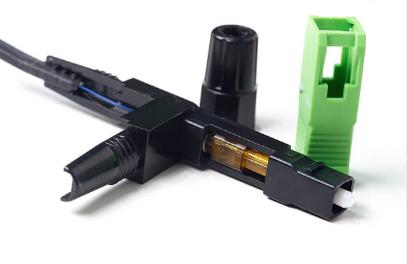 In the rapidly evolving world of telecommunications, the demand for high-speed internet and reliable network infrastructure has never been greater. Fiber optic technology stands at the heart of this digital revolution, enabling lightning-fast data transmission that powers everything from streaming services to cloud computing. However, one of the most persistent challenges in fiber deployment has been the termination process—connecting individual fibers to equipment quickly, reliably, and cost-effectively. Enter the fiber fast connector, a game-changing innovation that has transformed how network technicians handle fiber terminations in the field. These compact devices have become indispensable tools in modern fiber deployments, particularly in Fiber-to-the-Home (FTTH) rollouts, data center expansions, and emergency network repairs. By eliminating the need for expensive fusion splicers, messy epoxy compounds, and time-consuming polishing procedures, fiber fast connectors have dramatically reduced installation times and lowered the barrier to entry for fiber optic network construction. This comprehensive guide explores everything you need to know about optical fast connector—from their internal construction and various types to installation best practices and real-world applications. What Is a Fiber Fast Connector? Types of Fiber Fast Connectors Optical Fast Connector Installation Guide Applications of Fiber Fast Connectors Conclusion What Is a Fiber Fast Connector? A fiber fast connector—also referred to as a field-installable connector, mechanical splice connector, or pre-polished connector—is a mechanical device that allows a single optical fiber to be terminated in the field without requiring fusion splicing or factory-style polishing. These connectors are designed for rapid on-site installation, typically taking less than three minutes to complete from start to finish. Unlike traditional termination methods that demand trained technicians, specialized equipment, and controlled environments, fiber fast connectors empower installers with a simple, repeatable process that consistently delivers reliable optical performance. Internal Construction and Working Principle Component Function Ferrule A precision ceramic cylinder (typically 1.25mm for LC or…Read more →
Testimonials

Lomoveishiy – Finland11

